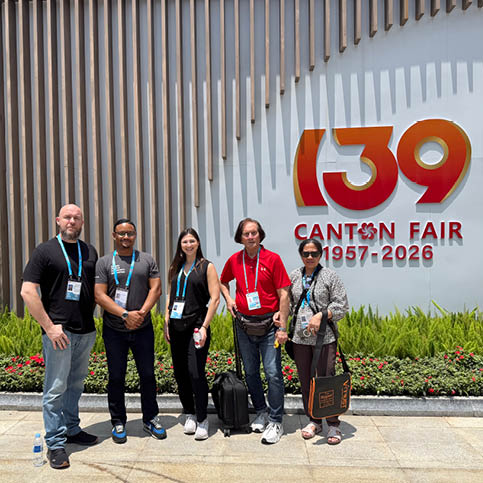
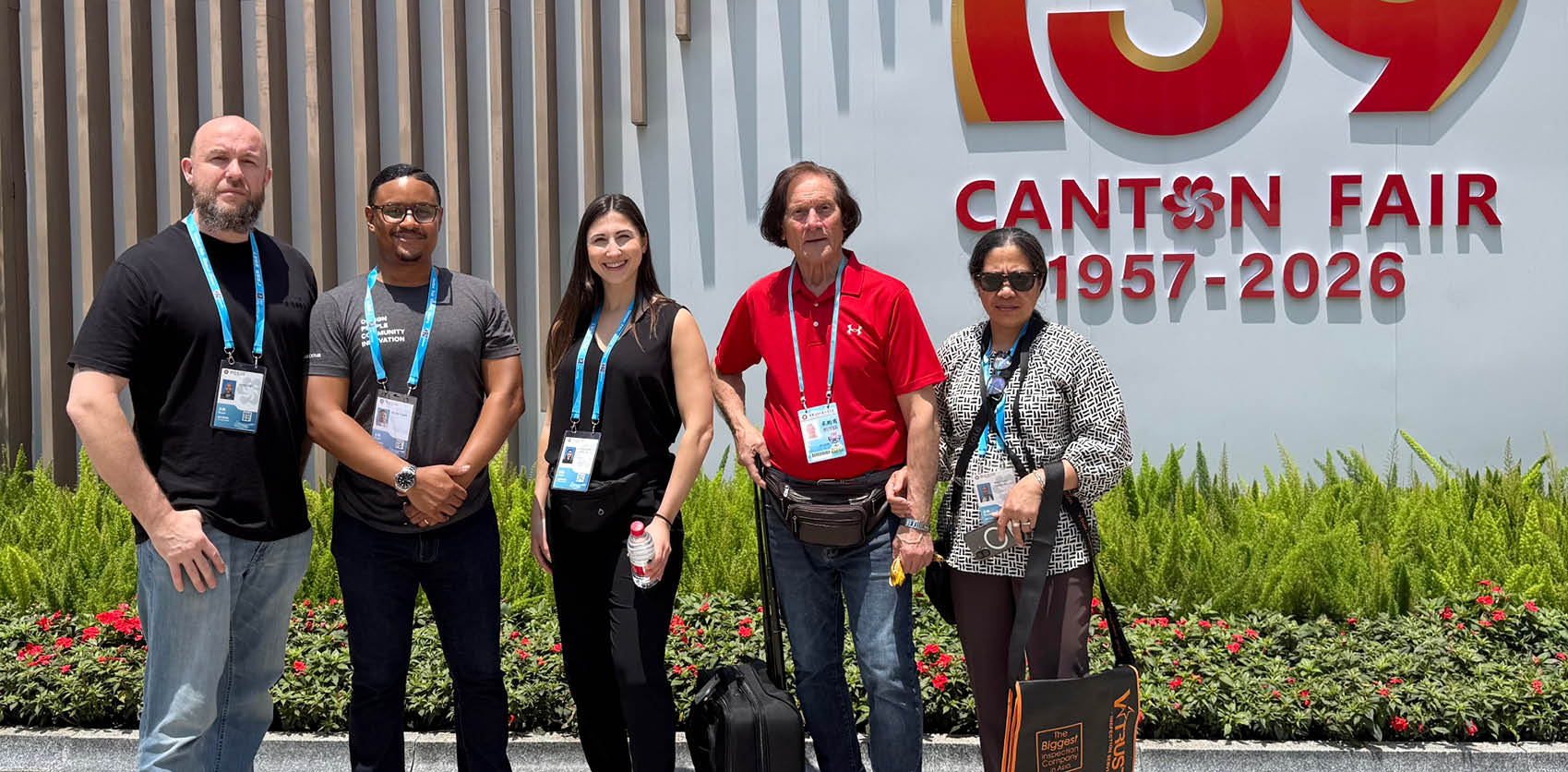
When a client invites you halfway across the world to explore new possibilities for a project, you eagerly accept!
Earlier this year, I had the opportunity to accompany a client to the 139th Canton Fair in Guangzhou, China, one of the largest trade exhibitions in the world. What began as a standard architectural engagement quickly evolved into a global exploration of materials, innovation and collaboration.
From First Meeting to Global Collaboration
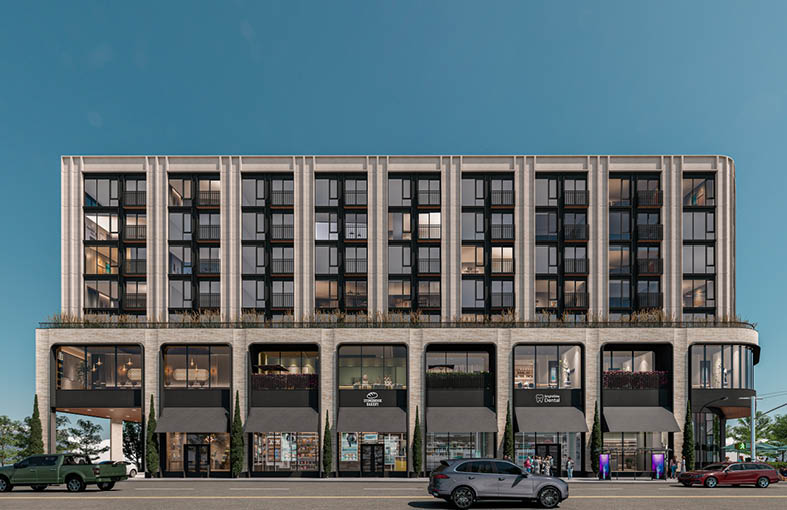
Our journey started in the Greater Toronto Area (GTA), where we first met to discuss a potential multifamily development. That initial conversation led to our team being retained for full architectural services on a 7-storey luxury purpose-built rental project in Mississauga, totaling 98 units.
With a strong background in the furniture industry, our client is no stranger to sourcing internationally. Their goal for this trip was clear: identify high-quality building materials at a more competitive price point, without compromising Canadian standards and certifications.
To get the most out of the experience, I joined the client alongside a prospective builder, bringing together a client–architect–builder perspective that proved invaluable throughout the trip.
First Impressions: Scale and Speed
One of the most striking aspects of arriving in Guangzhou was the sheer magnitude of construction. The scale, pace and density offered a view into the region’s focus on development and innovative design.
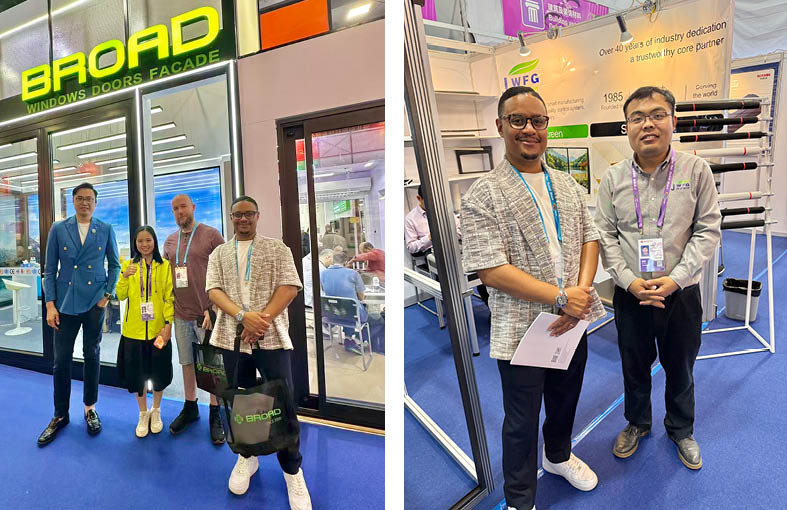
At the Canton Fair and across various supplier showrooms, we explored a wide range of products:
- Windows and exterior doors
- Cladding systems
- Interior finishes
- Prefabricated assemblies
Given the size of our project, the potential to leverage economies of scale was top of mind.
Sorting Through the Noise
With hundreds of suppliers showcasing thousands of products, the biggest challenge was not finding options, but rather narrowing them down.
Our focus quickly became identifying manufacturers that could meet Canadian testing and certification standards. This required careful due diligence, asking the right technical questions and digging into compliance documentation.
As we moved from supplier to supplier, we discovered that many large North American brands already rely on these same manufacturers. That realization shifted our perspective, this wasn’t about taking risks on unknown products, but rather understanding a global supply chain that’s already influencing our local market.
Innovation in Materials and Design
From a design standpoint, the fair was incredibly inspiring.
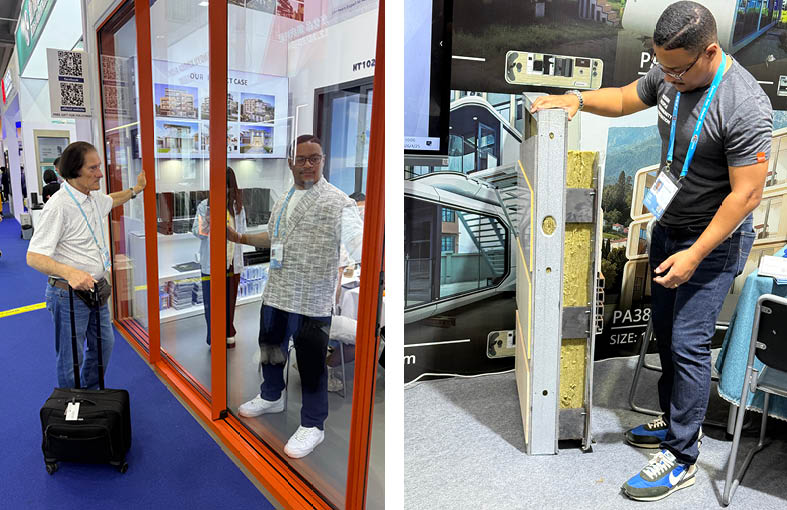
We encountered materials and systems that are not commonly used in Canada, including:
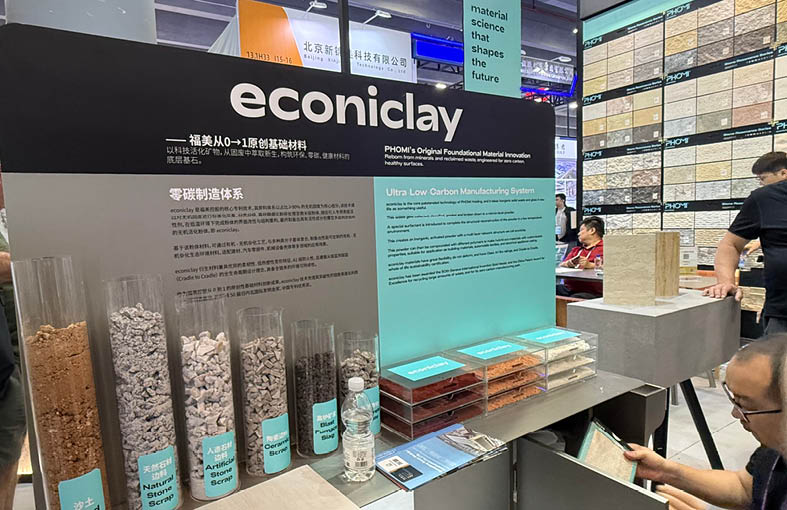
- Flexible, lightweight exterior cladding made from recycled stone waste, sand and natural clay, an exciting option given the curved façade elements in our current design.
- Modular exterior wall panels, pre-assembled and ready for installation in low-rise applications.
What stood out most was the level of technical sophistication behind these systems. Some modular materials and assemblies already included testing by accredited North American laboratories.
For example:
- Vapour permeable air barriers could be swapped for familiar products like Blueskin VP160 or Tyvek HomeWrap.
- Non-combustible cladding options that meet the criteria of acceptance under CAN/ULC-S114 and ULC S135.
This level of flexibility challenges the assumption that international sourcing limits compliance. Instead it can enhance it when approached correctly.
The Economics of Building Differently
Perhaps the most eye-opening takeaway was the pricing.
Even when factoring in international shipping costs, the potential savings compared to domestic procurement methods were significant. For our client, who already has warehouse capacity and logistics experience, direct sourcing presents a substantial advantage.
It is important to note that every product must still undergo a rigorous review by the full consultant and construction team before being approved for use. But seeing these possibilities firsthand reframed how we think about balancing design intent with budget constraints.
Looking Ahead
This experience expanded my understanding of what’s possible in construction.
It reinforced the idea that achieving strong design intent doesn’t have to be compromised by cost, instead, it may simply require looking beyond traditional procurement channels, exploring new materials and embracing a more global perspective. As we continue developing the Mississauga project, the knowledge gained from this trip will directly influence our material selections, design decisions and overall approach.
And perhaps most importantly, it highlighted the value of collaboration, when clients, architects and builders explore opportunities together, the results can go far beyond expectations.
At Ware Malcomb, our multifamily practice focuses on creating thoughtful and high-performing communities that respond to market demands and evolving resident expectations. From luxury purpose-built rentals to large-scale mixed-use developments, we take a holistic approach that integrates design excellence, technical precision, and cost-conscious solutions from the outset. Experiences like the Canton Fair strengthen our commitment to exploring innovative materials, global partnerships and smarter procurement strategies, while still meeting local standards. This approach helps deliver resilient and efficient projects that maintain strong design intent and support our clients’ vision at every stage.