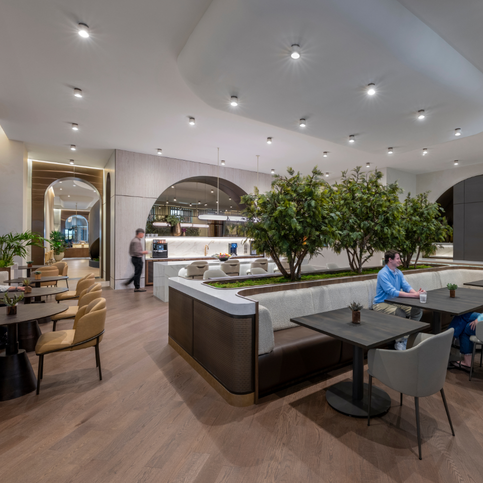
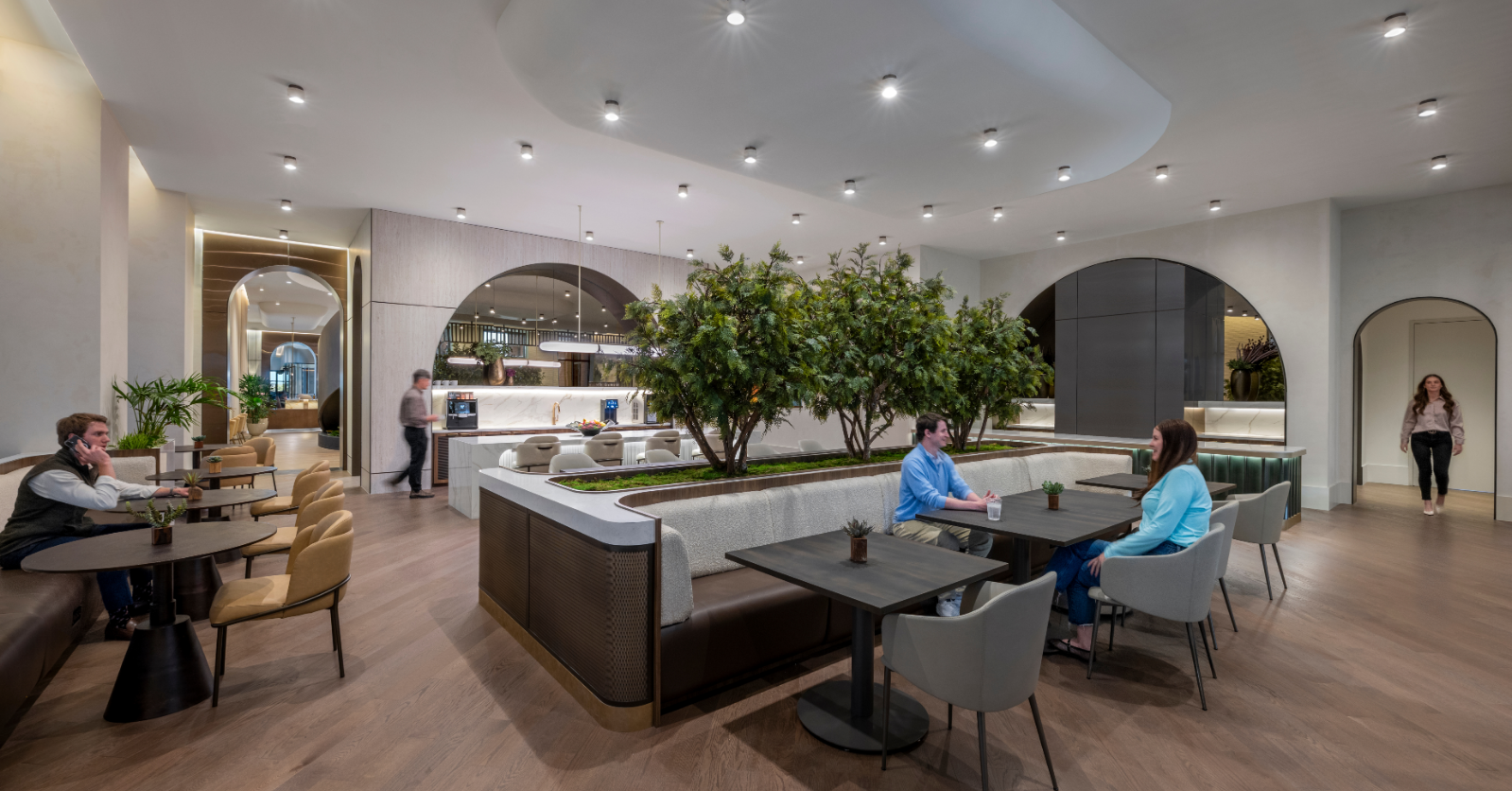
As organizations increase in‑office presence to support collaboration, knowledge sharing, and culture, the workplace must deliver experiences that truly engage employees. Today’s challenge is to do more within reduced footprints—creating environments that are efficient, meaningful, and memorable.
Our design approach leverages multisensory strategies to elevate the employee experience and strengthen emotional connections to the organization. By thoughtfully engaging sight, sound, smell, touch, and taste, we create immersive workplaces that foster belonging, reinforce company culture, and offer value beyond what can be achieved at home or in third‑place settings. Rather than relying on mandates alone, this approach transforms the office into a destination—welcoming, engaging, and purpose driven. This evolution defines a new workplace typology: the Multisensory Workplace.
Our interior design team is advancing a more connected workplace experience by designing spaces that consider the full sensory spectrum of sight, sound, smell, taste, and touch.
Sight: Light & Color
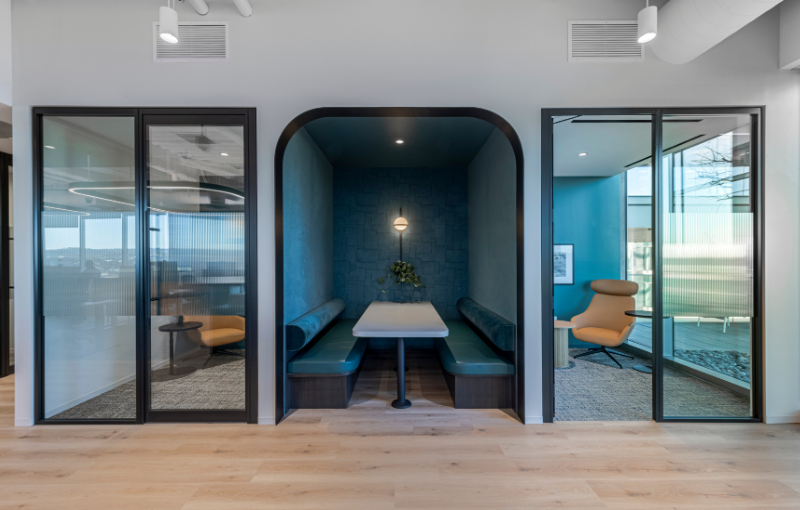
Through sight, occupants can engage with amenities and finishes that elevate mood, inspire creativity, and influence how a space is experienced. An integral part of this approach is the incorporation of innovative lighting designs that are dynamic, engaging, and functional. Interior designers have seen a light evolution over the last two decades within the interior design industry. Lighting types, installation methods, availability, and reasonable costs have given interior designers infinite choice on how one lights the interior environment. With today’s LED advancements, designers are no longer constrained by fixture depth or heat, opening the door to highly flexible, efficient lighting solutions in diverse forms and finishes. Mixing these specified light fixtures with natural outside light creates unique and memorable interior spaces. Smart control shades, daylight harvesting controls timed with the placement of the sun allow for dramatic and pleasing interior light levels reminiscent of the home. Institutional lighting schemes are a thing of the past, and light level planning based on task, function, or feeling evoked is commonplace.
Complementing the lighting strategy, the workplace color palette plays a vital role in reinforcing organizational ethos and identity. Playing with the intensity of color based on the function of the space allows interiors designers to dial up or dial down the sensory perception within the built environment. Soft, calming tones define quiet zones, while moderate color intensity anchors focused work areas. Vibrant, brand‑driven colors activate social hubs and encourage interaction. When thoughtfully paired with lighting, color variation becomes a key design pillar throughout the built environment.
Sight: Shapes & Objects
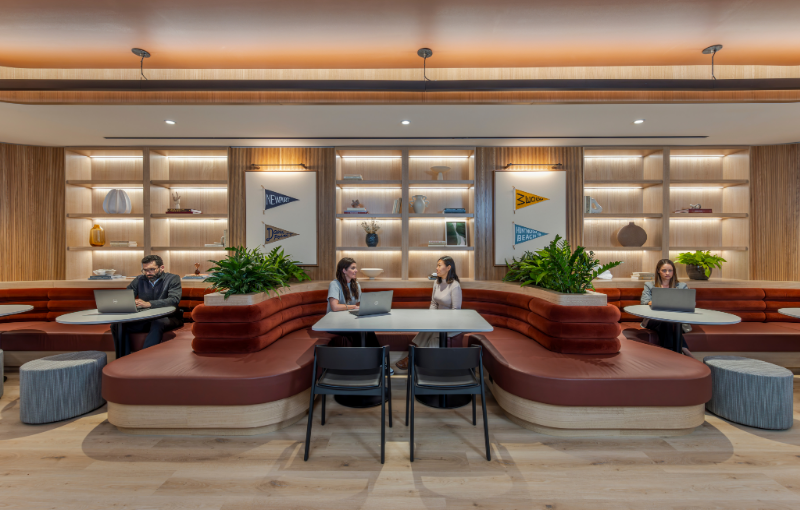
Interior designers call upon design rules of balance, proportion, rhythm, balance, and contrast when designing a space. We place high value on eliminating sharp angular surfaces within the interior environment – rounded corners, soft curves, eased edges with fluid lines, sculpted surfaces all play well with human cognitive perception. This can be reflected in finishes and prominent interior structures or objects to create a deeper emotional connection to the workplace. Items generally found in the home, such as throw pillows, blankets, books, games and branded products all are emotionally binding, immersive and memorable.
Sound
Employees on average lose 86 minutes per workday due to noise distractions. Design for sound control is no longer an element that is “nice to have”, but rather a critical design element that must accounted for early in the design process. Every architectural material specified for a project has to consider its sound absorption and isolation performance. High‑performance ceilings, wall finishes, soft flooring, furnishings, and window treatments work together to create a comfortable acoustic environment. Designers further manage sound through acoustic phone booths, enclosed focus rooms, and conference spaces, with modular and demountable partitions offering enhanced sound control now commonplace in modern offices.
One solution we see clients prioritizing is the inclusion of whole office sound masking systems that can be segregated to areas across the office floor plate. These systems are often integrated with music and nature sound systems that further enhance the auditory pleasure of occupants. Clients can dial the system up or down based on area and intended auditory levels, allowing for custom. This allows for control of quiet zones, meeting areas, break areas and common areas. This approach demonstrates how thoughtful material specification and technology combine to support a pleasant auditory environment.
Smell
Have you ever walked into a hotel and noticed a wonderful welcoming smell within the lobby Many companies, such all have recognized that adding scent within lobbies, reception areas, boardrooms, and co working areas boosts employee wellbeing, connection, and brand connection. Clients use standalone area scent systems or mechanical integrated systems that add a signature branded scent, now commonly referred to as scent marketing. Interior designers thoughtfully position amenity spaces to enhance olfactory comfort, using elements such as barista stations, fresh‑baked food areas, and regionally inspired scents to create welcoming sensory connections to both the workplace and its geographic context. An example of this could be the inclusion of tropical floral smell in Miami or a woodsy, mossy smell for an office space in the Pacific Northwest.
Taste
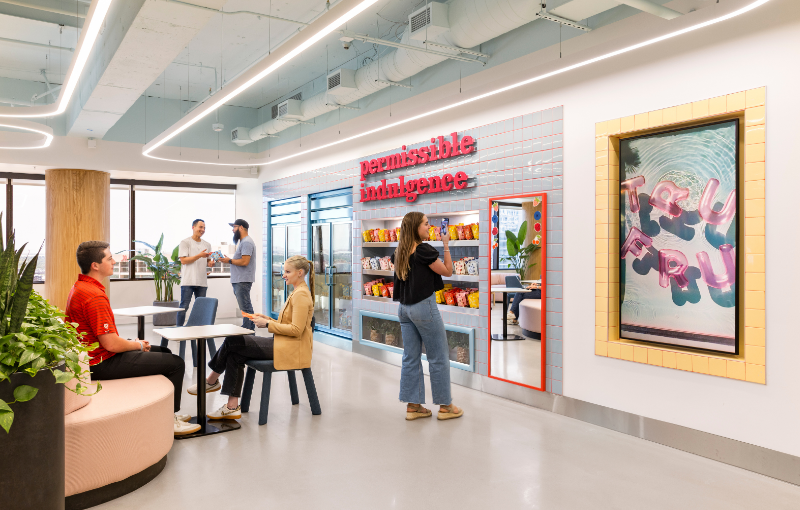
Food has gone beyond “workplace perk” status. Thoughtful consideration of food and beverage offerings is a key component of the multisensory workplace, as organizations increasingly recognize their impact on employee well‑being. Rather than relying on sugar‑heavy snacks and soft drinks, companies are curating options that support physical health—focusing on hydration, wellness, sustained energy, and variety as meaningful workplace amenities. Bottled water is giving way to still and sparking water systems. Traditional coffee brewers are reimagined as premium bean coffee grinders and cold brew taps. Tea stations placed within the office environment are paired within quiet zones and fitness areas. When it comes to workplace food offerings, organizations are increasingly prioritizing well‑being and variety for their employees. Nutritious options such as fresh fruit, yogurt, high‑protein and plant‑forward wraps, and sandwiches support daily health and energy. Moving beyond traditional breakrooms, many offices are introducing micro‑markets that provide convenient, fresh grab‑and‑go choices throughout the day. Distinct amenities employees don’t have access to daily at home create an added incentive to reengage with the workplace.
Touch
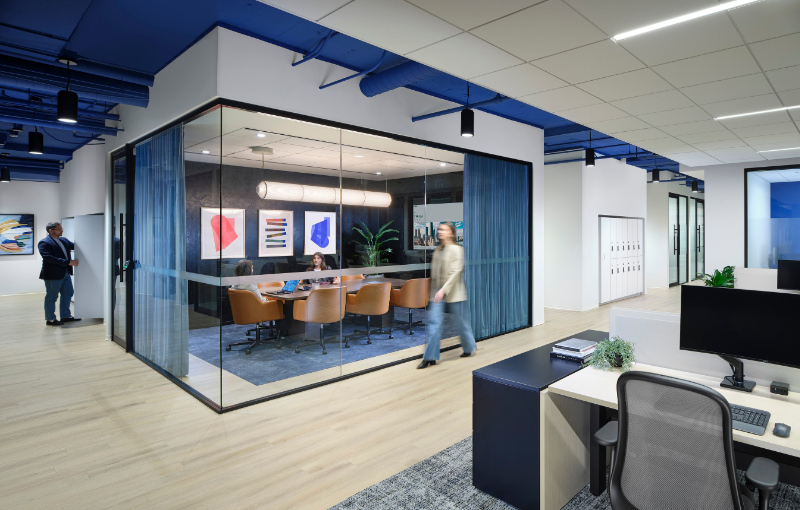
Touch categorizes texture, temperature, and ergonomics within the workplace. Temperature, and the end user’s ability to control the ambient temperature within a set perimeter can greatly influence employee satisfaction. Many organizations utilize smart building technology, such as Power of Ethernet (PoE) and Internet of Things (IoT), to allow employee control of the workplace environment. One‑touch control through an employee’s own device allows personalized management of temperature, lighting, shading, privacy, scheduling, and space access. This intuitive interaction with the workplace environment strengthens the sense of touch as a sensory experience and contributes meaningfully to comfort, autonomy and satisfaction at work. touch control through an employee’s own device allows personalized management of temperature, lighting, shading, privacy, scheduling, and space access.
Sensory‑driven design reduces return‑to‑office anxiety and enabling cross‑functional teams to deliver richer, more connected workplace experiences that prioritize employee health and wellbeing. This approach provides lasting emotional and cultural connections to the organization. Multisensory Design is here to stay and will become is important tool in the creation of the next generation of workplace. While not all ideas highlighted in this article must be implemented at the same time, a thoughtful approach to select integration can have lasting measurable effects on employee morale, workplace satisfaction, and brand integrity.