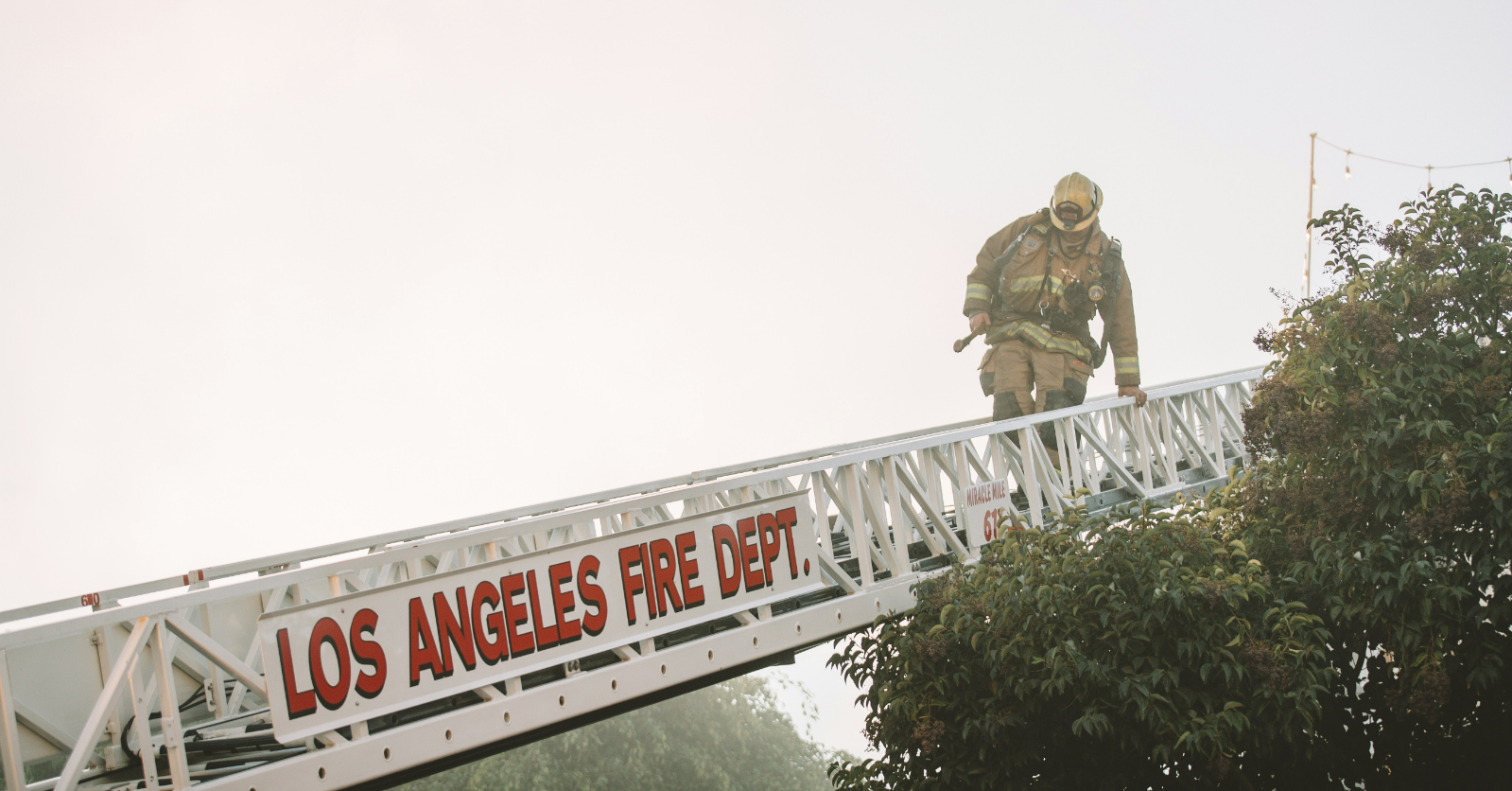
After catastrophic wildfires tore through Los Angeles County, commercial corridors have arrived at a critical crossroads in rebuilding.
Background
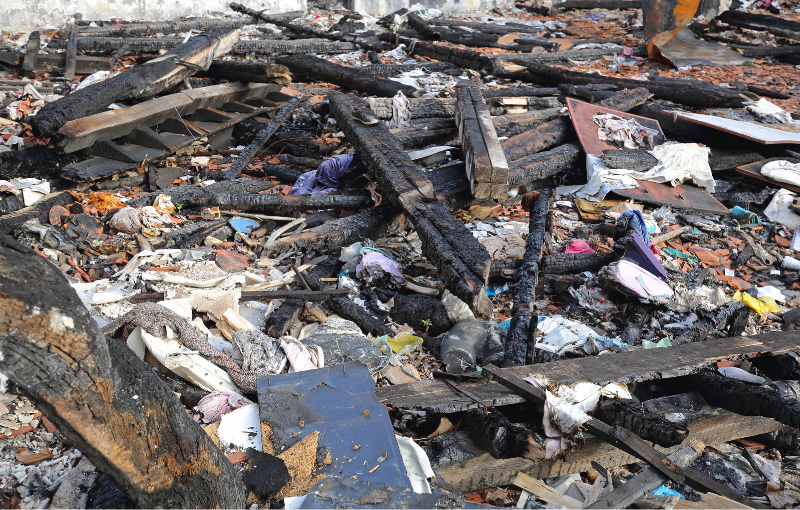
In January, unprecedented wildfires swept through Malibu, Pacific Palisades, and Altadena, damaging 18,000 structures and forcing 200,000 residents to evacuate. The economic toll is staggering, with property losses exceeding $250 billion, and insured losses estimated at $30 billion. The fires didn’t just destroy homes and businesses; they exposed systemic bottlenecks in LA County’s insurance, permitting, and rebuilding processes.
Los Angeles must rise to meet the challenge of rebuilding, showing it can reinvent how commercial corridors operate under climate stress. By elevating insurability to the status of infrastructure and pairing it with AI-powered permitting, equity stabilizers, and resilient design, the city has the opportunity to craft a new blueprint for future-ready recovery.
Insurance as ‘Infrastructure’
Insurance plays a critical, multi-layered role in post-disaster recovery, shaping everything from rebuild speed to market stability and policy reform. The wildfire crisis made one truth painfully clear: owners and investors must treat insurability like critical infrastructure. Insurability, just like power and roads, is a core determinant of asset value.
Key themes surrounding insurance that have surfaced include:
- Insurance retreat: The wildfires showcase that major insurance carriers continue to leave fire-prone markets, making properties effectively “uninsurable” or defaulting to California’s limited FAIR Plan. Without viable coverage options, commercial financing risks collapse and development pipelines stall.
- Premium shock: Even when coverage is available, premiums are spiking, eroding returns and rendering some assets economically nonviable.
- Valuation risk: CRE valuations often assume insurance availability. In reality, insurability is becoming a scarcity premium. Properties outside high-risk zones may command a higher value simply because they can be insured.
- Development constraint: New projects in the wildland-urban interface face not only construction costs but also the looming question: Will insurers offer policies in these areas in the next 10 years?
Commercial real estate in LA is still priced as if fire risk is a one-off event, even though it’s a systemic, recurring stressor reshaping demand, insurance, and infrastructure. The current blind spot? Long-term erosion of market confidence, which could trigger sudden repricing once investors recognize the cumulative impact.
AI-Powered Permitting: Promise or Placeholder?
Even when capital is available, commercial rebuilds face complex permitting hurdles: fireproofing upgrades, ADA compliance, local clearances, and environmental reviews.
To ease delays, LA launched Archistar’s AI e-check in April through a coalition led by Steadfast LA and LA Rises. Reports confirm it has cut residential plan review times from months to weeks, but there’s currently no public data for commercial projects.
With the push to innovate and streamline the permitting process, CRE stakeholders should monitor the rollout, request usage stats, and calibrate timelines based on pilot performance.
Small Business Relief: The Anchor of Corridor Recovery
Small businesses, which account for the majority of storefronts in Malibu, Pacific Palisades, and Altadena, faced prolonged closures, revenue collapse, and workforce displacement due to the fires.
To counter this, LA County deployed an aggressive relief strategy, injecting $23.4 million into wildfire-impacted businesses and workers. The scale of need was staggering: 14,400 applications poured in, underscoring the vulnerability of local commerce. Ultimately, the program delivered grants to 2,181 businesses and 2,892 workers, with awards reaching up to $25,000 per business and $2,000 per worker.
This infusion wasn’t just financial; it was structural. By stabilizing small businesses, LA County is attempting to preserve commercial corridor continuity, prevent vacancy spikes, and maintain consumer confidence.
Relief programs like these also signal a broader trend: equity-driven recovery is now a prerequisite for resilience. Public-private partnerships, targeted grants, and technical assistance are emerging as critical tools to ensure that recovery benefits aren’t concentrated among large commercial interests but extend to the local enterprises that define community identity.
Community Blueprints Mandate Reinvention
California’s recovery strategy is no longer about replacing what was lost; it’s about future-proofing commercial corridors against climate volatility. In August, Governor Newsom endorsed ‘LA County Forward: Blueprint for Rebuilding,’ a plan designed to accelerate recovery while embedding resilience. The blueprint calls for:
- Undergrounding 153 miles of power lines to reduce ignition risk and stabilize energy delivery.
- Deferring permit fees and streamlining approvals through one-stop centers to cut rebuild timelines by up to 70%.
- Leveraging public-private partnerships to co-fund infrastructure upgrades and resilience retrofits.
Complementing this, the ‘Think Big and Act Boldly’ report delivers 465 recommendations for commercial corridors, ranging from Recovery Authorities to centralize governance, to Resilience Districts that pool resources for fire-hardening, and communications infrastructure upgrades to prevent the breakdowns seen during January’s evacuations.
These frameworks signal a paradigm shift: corridor recovery is now a design challenge, not just a construction task. Owners and developers are urged to:
- Cluster mixed-use properties near transit hubs to reduce car dependency and boost foot traffic.
- Adopt non-combustible exteriors and defensible landscapes to meet emerging fire codes and insurer requirements.
- Embed microgrids and EV infrastructure for energy resilience and future mobility.
- Partner with utilities (SCE, LADWP) to accelerate undergrounding and grid modernization.
Post-fire recovery offers a once-in-a-generation opportunity to reimagine the commercial ecosystem. Instead of restoring outdated layouts, stakeholders can create climate-smart corridors that integrate:
- Mixed-use clustering: to diversify revenue streams and stabilize demand.
- Underground utilities and microgrids: to harden infrastructure and reduce outage risk.
- Defensible public realm and green buffers: to mitigate ignition hazards while enhancing livability.
- Technology integration: like EV charging stations, smart sensors, and adaptive energy systems to future-proof assets and attract next-generation tenants.
What Owners, Lenders, and Businesses Should Do Now
1. Treat insurability like infrastructure in underwriting.
Insurance is no longer a line item; it’s a gatekeeper for capital. Plan to incorporate carrier appetite, premium trajectories, and coverage continuity into every pro forma. Model scenarios for 5–10 years, factoring in wildfire risk zones and mitigation measures. Recognize that properties outside high-risk areas may command a “scarcity premium” simply because they can be insured.
2. Digitize workflows—but verify AI performance.
AI permitting tools like Archistar’s e-check promise speed, but commercial adoption remains unproven. Use them for early compliance checks but demand hard data before assuming timelines will shrink for complex scopes. Pair automation with human QA/QC to avoid costly rework.
3. Build resilience beyond code minimums.
Future-proof assets by embedding non-combustible façades, defensible landscaping, and hardened utility rooms. Leverage incentives in LA County Forward and Think Big blueprints—such as undergrounding partnerships and resilience grants—to offset upfront costs. These upgrades aren’t just safety measures; they improve insurability and long-term asset value.
4. Stabilize tenant ecosystems.
Vacancy cascades kill corridor recovery. Tap small-business relief programs, fee waivers, and consider Community Benefit Agreements (CBAs) to retain local vendors. Support pop-up retail and flexible leasing to maintain foot traffic while major rebuilds progress.
5. Plan beyond restoration.
Don’t replicate pre-fire layouts. Use this moment to reimagine corridors with mixed-use clustering, adaptive reuse, and integrated technology—EV charging, microgrids, and smart sensors. These features attract next-generation tenants and align with insurer and investor expectations for resilience.
Los Angeles stands at a commercial rebuild reckoning as unchecked, climate-driven disasters threaten to erode commercial viability. By treating insurance as infrastructure, utilizing AI-enabled permitting, supporting the rebuild efforts of small businesses, and employing resilient design, commercial corridors can become climate-ready hubs. As a 25-year Angelino, I am both hopeful and inspired. We will meet the challenge!
Additional References:
1. https://recovery.lacounty.gov/rebuilding/permitting-progress-dashboard/
2. https://www.ca.gov/lafires/rebuilding-la/
3. Steadfast LA
Lisa Reed spoke on ICSC Centerbuild’s Masterclass panel ‘Disaster Recovery & Resilience: Rebuilding Communities After Hurricanes, Fires and Floods’ on December 3, 2025. She focused on the LA Fires and the challenges retail and mixed-use developments face during recovery, including: designing for resiliency, navigating insurance and permitting post-disaster, and balancing speed with equity.