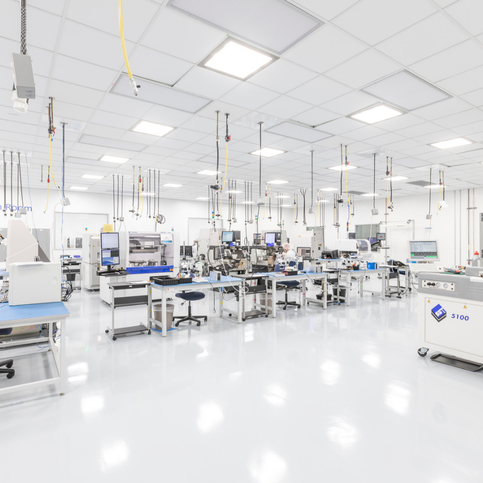
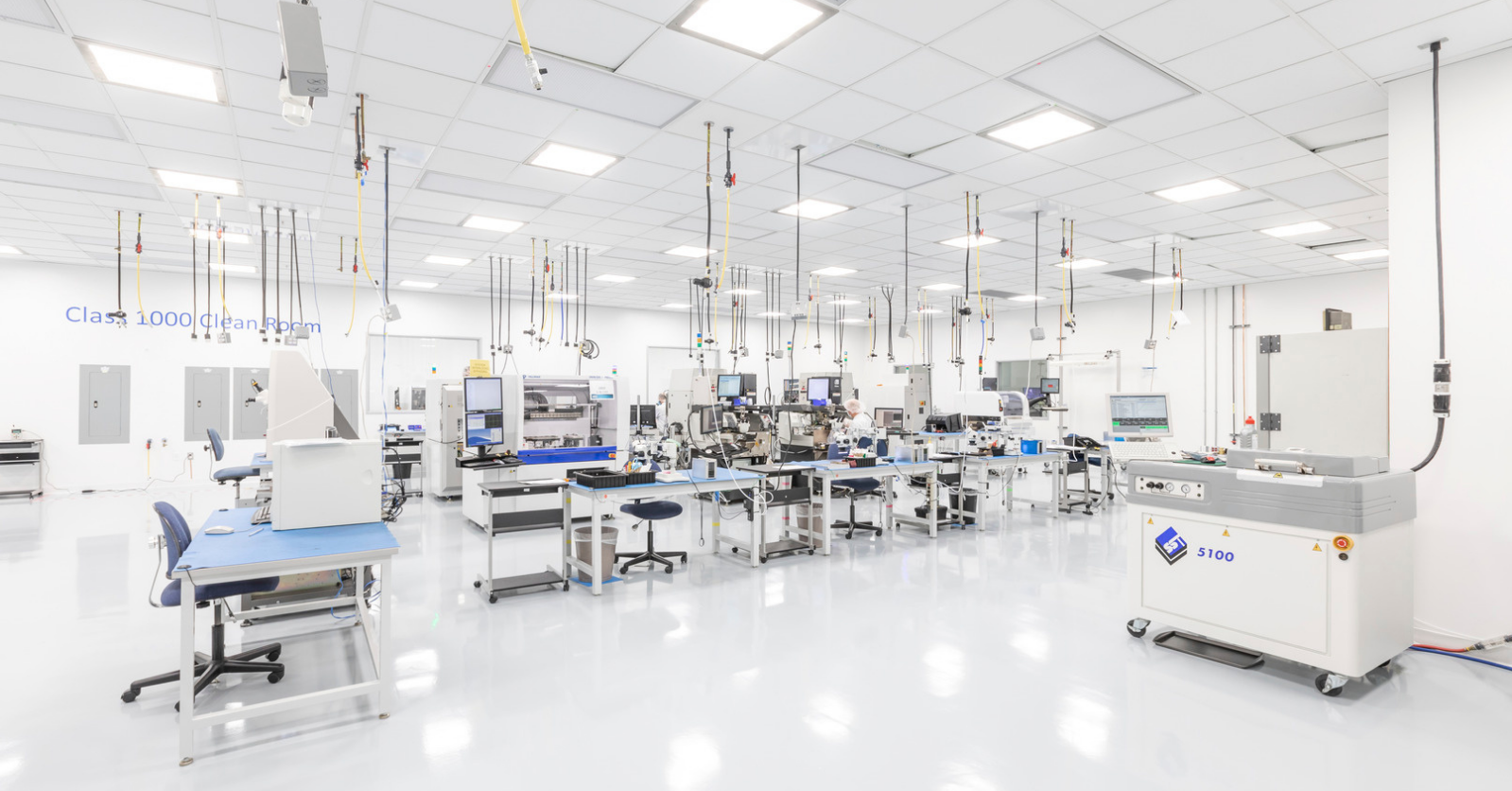
For decades, laboratories have adhered to a familiar architectural script: standardized grid layouts, strict planning modules, clear separations between disciplines, and long banks of workstations designed for manual bench science. The last several years have seen science change dramatically; the design of lab spaces, however, has been stagnant.
Today, artificial intelligence, advanced automation, and autonomous robotics are redefining how research is conducted. These advancements are accelerating iteration cycles, eliminating repetitive tasks, and enabling deeper collaboration among increasingly interdisciplinary teams. As a result, the design of lab buildings is entering a transformative moment. The spaces that once supported predictable, siloed processes must now support dynamic, data-driven workflows that mix humans, robotics, and digital systems in entirely new ways. Designers are rethinking the laboratory environment for this emerging era of technology and intelligent science.

The Gap Between Workplace Evolution and Lab Evolution
If you compare workplaces from 20 years ago to those today, the contrast is jarring. Offices are now flexible ecosystems: collaboration zones, hoteling, lounges, adaptable furniture systems, demountable partitions, and highly tech-enabled environments that support a range of work styles. In contrast, labs from 20 years ago do not differ much compared to those seen today.
Aside from a shift toward mobile casework, the fundamental layout logic has barely budged: discipline-based zoning, uniform bench runs, and fixed modules tied to structural grids. The workplace has embraced efficiency and flexibility, while labs have largely remained static.
AI, automation, and advanced robotics are accelerating scientific processes, reducing the number of bench experiments, and catalyzing new interdisciplinary workflows. Until now, we have been asking for those innovations to operate inside architectural models built for an earlier generation of science.
AI Is Transforming How Scientists Use Space
AI accelerates research and is reshaping how and where research happens.
- AI reduces time spent at the bench
Emerging computational tools can collapse thousands of potential ideas into a handful of viable candidates in seconds, long before a scientist ever touches a pipette. AI is changing the physical demand on lab space: fewer exploratory experiments, more targeted hands-on work, and more emphasis on analysis, collaboration, and decision-making.
- AI can direct scientists toward each other
Imagine entering a building and your ID badge tells you:
“Go to Lab 5 today—five other scientists working on your project are there already.”
AI-enabled spatial allocation could cluster people working on similar problems, improving speed, reducing redundancy, and encouraging real-time idea exchange.
- AI calls for less-siloed layouts
Traditional labs separate biology, chemistry, microbiology, and computational work into distinct zones, often on different floors. In today’s landscape, efficient research teams operate fluidly across disciplines. AI thrives when people and data do too. The architecture of lab spaces must catch up.
Automation and Robotics Are Rewriting Lab Planning Norms
Robotics in labs can be divided into two broad categories, each with significant design implications.
1. Large stationary automation systems
These platforms handle liquid transfers, move microplates, and run repetitive protocols with precision and consistency.
These automation systems are fast, sterile, and accurate, but also much larger than traditional human bench setups. They require higher clearances, different aisle widths, different utilities in the ceiling, and dedicated safety and enclosure strategies
Designing only for human-scale casework no longer fits reality.
2. Mobile robots and autonomous delivery vehicles
Autonomous mobile robots (AMRs) and even “robotic dogs” now transport samples, deliver consumables, and support high-throughput workflows.
Their presence introduces new design questions:
- Should they travel alongside humans?
- Do they need dedicated pathways or “backstage” routes?
- Could they move overhead, in chases, or via dumbwaiter-like shafts?
- How do we manage cross-traffic between people and robots safely?
These decisions affect circulation, structural planning, vertical transportation, and environmental zoning.
3. Fully autonomous labs are emerging
Various labs already use robots to feed other robot systems that run 24/7 with minimal human intervention.
Designing for this requires:
- adaptable utility grids
- flexible, plug-and-play infrastructure
- interchangeable modules that can shift from human to robotic use with minimal renovation
- clear separation strategies when needed, but not rigid silos
Today, most buildings carve out separate rooms for automation versus human benchwork. The future will demand one type of lab that can support either at any time.
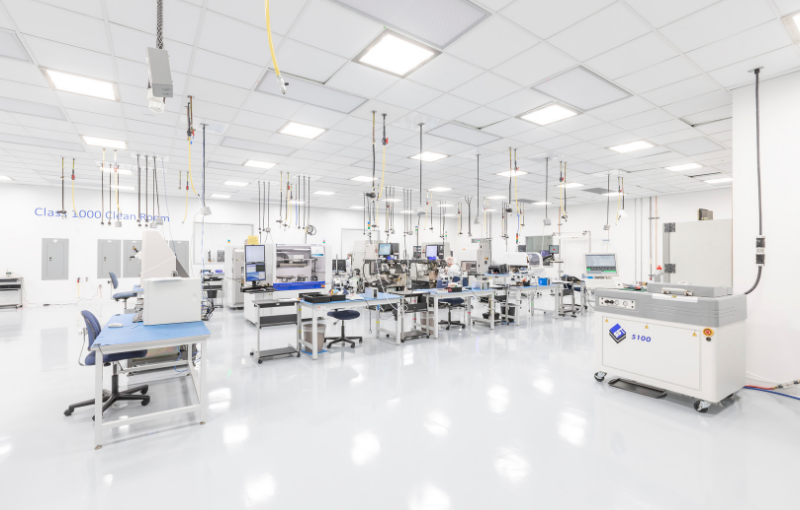
Flexibility Is Becoming the New Lab Currency
Beyond AI and robotics, the larger trend is flexibility – true flexibility, not just mobile benches.
1. Labs that can scale between humans and robots
A space that works for a person today should seamlessly support a robotic platform tomorrow. That means:
- utilities accessible in ceilings, not fixed at benches
- fewer hard walls
- demountable partitions
- non-grid-dependent planning
- services that anticipate equipment mobility
These features showcase how future-proofing a building works.
2. Mixed-use zones inside the lab
Just as office environments support multiple modes of work, labs must do the same. Consider:
- quiet zones for neurodivergent scientists
- small collaboration alcoves with cleanable soft seating
- whiteboard and digital brainstorming areas inside gowning zones
- touchdown points for computational scientists who need proximity to experiments
The goal: enable scientists to stay in flow without leaving their controlled lab environment to collaborate or concentrate.
3. Less empty, underutilized lab space
Labs cost roughly three times as much to build and operate as office space. Yet most labs sit partially empty due to siloed use and rigid zoning.
AI, robotics, and flexible planning allow buildings to operate more efficiently, supporting more research with less space.
Rethinking the Grid Itself
For decades, labs have been designed around standard structural modules, often an 11-foot planning grid. But what if the grid wasn’t the most essential organizing principle anymore?
With robotics capable of moving horizontally, vertically, or via autonomous systems, the building might instead be shaped more by:
- site constraints
- material systems
- equipment requirements
- or operational workflows
…rather than by inherited academic-era planning norms.
The Path Forward
AI and automation are not simply tools; they’re catalysts for a fundamental reimagining of how scientific environments function. This moment mirrors the shift that transformed workplace design, but with far more profound operational implications.
To support the science of the next 20 years, lab design must embrace:
- Less siloed, more collaborative environments
- Spaces that accommodate both humans and robots interchangeably
- Flexible infrastructure capable of evolving rapidly
- New circulation strategies for autonomous delivery systems
- Collaborative and quiet zones within the lab itself
- A willingness to rethink long-held planning norms and grids
The future lab is more than just a more efficient version of today’s. The future lab is an entirely new typology that blends intelligence, adaptability, and human-centered design.