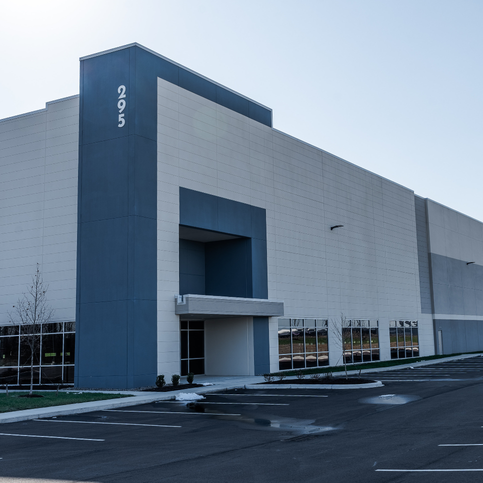
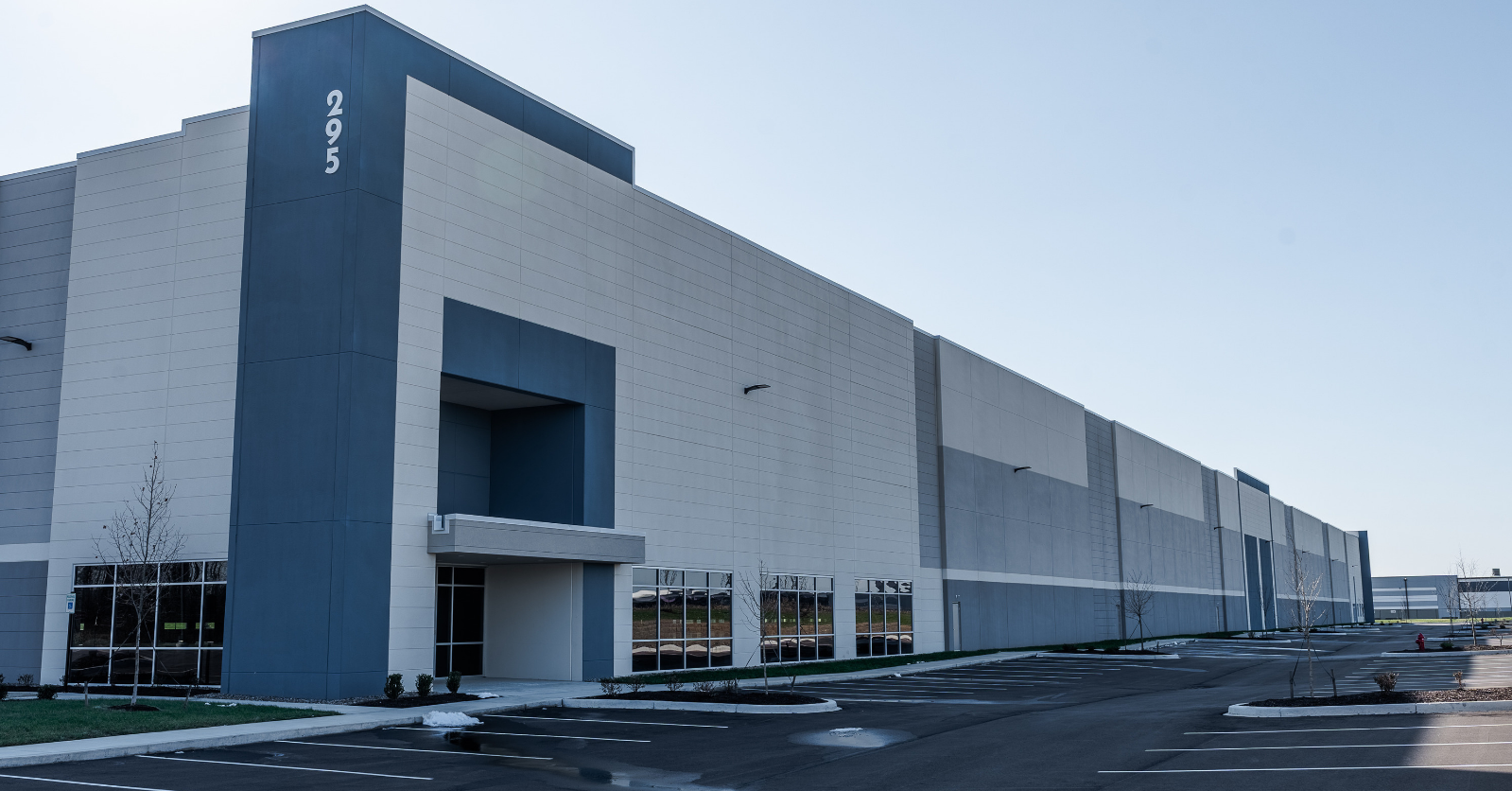
When Pizzuti Companies set out to develop one of the last speculative industrial sites in the River Ridge Market near Louisville, Kentucky, they understood the project would be complex, but the location made the challenge worthwhile. Pizzuti River Ridge lies within one of the Midwest’s most sought-after industrial parks, where limited land availability, infrastructure constraints, and rising demand heighten the importance of thoughtful execution. Positioned on the Indiana side of the Louisville market, the site benefits from favorable tax incentives, specialized zoning, and direct access to I‑65, enabling efficient one-day reach to major U.S. markets while avoiding downtown congestion and higher-cost peer markets.
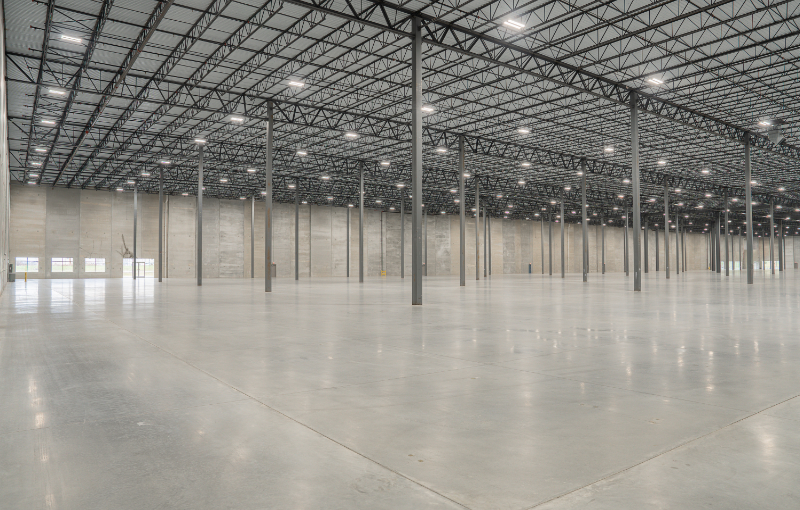
Ware Malcomb partnered with Pizzuti to provide architectural design services for the 236,324 square foot speculative warehouse that is accommodating for both single and multi-tenant users. Having done various projects across multiple markets with Pizzuti Companies, this development marked an important expansion into the Midwest, a new region for Ware Malcomb.
A Site Defined by Unusual Challenges
The River Ridge site posed a range of natural and development-related challenges that demanded creative problem-solving and analysis early on. Unpredictable subsurface conditions such as underground caves, sinkholes, and highly variable soils -often described as “Swiss cheese”- complicated both design and construction of the site. Adding to the complexity were the elevation changes of nearly 20 feet across the property, which influenced building placement, stormwater management, and fire access requirements. To meet required coverage and square footage targets, our team reimagined the site’s grading and drainage strategy to mitigate flooding risks while accommodating the dramatic changes in the grade. By flattening the site and eliminating the western portion of the loop road, the final design preserved the required building footprint while aligning with the developer’s overall vision for the project.
Overcoming Land’s Limitations
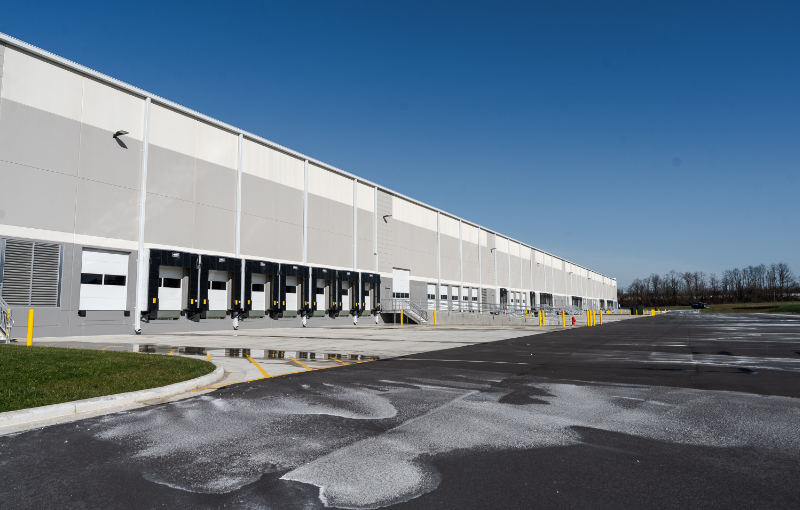
Ware Malcomb played a central role in turning land challenges into manageable design solutions through early planning and consistent communication with the Pizzuti team.
- Data-driven design: Since the River Ridge area has a lot of groundwater that flows through from the Ohio River, it created some difficult terrain to navigate. Ware Malcomb helped work alongside the general contractor AML Construction, surveyors, and geotechnical consultants to fully understand subsurface conditions before finalizing the building design. The building was positioned to avoid areas with subsurface caves and unstable soils, reducing the need for deep foundations or extensive ground improvements. Additionally, the infrastructure, access routes, and roads were adjusted to follow the natural terrain, helping control costs while maintaining structural integrity and constructability.
- Stormwater and site solutions: Water management became a priority due to elevation differences. Passive retention strategies, retaining walls, grading, and spillways were designed to manage even 100‑year storm events without impacting neighboring properties. Because the site sits across steep elevation changes, rainwater naturally flows downhill into lower areas, making runoff harder to control, which increased the risk of pooling, erosion, and flooding nearby properties. To address this, the project team carefully designed grading and drainage solutions that slowed, redirected, and safely managed stormwater while protecting the building and neighboring sites.
- Creative fire access: nearly impossible, the team developed alternative solutions, such as using the part of a sinkhole underneath the ground as part of water retainage, allowing for fire protection requirements without compromising safety or site efficiency.
Balancing Brand Standards with Site Reality
In addition to technical problem solving, Ware Malcomb helped Pizzuti maintain its established brand identity. The building’s most visible elevation was a long-side facing the roadway, requiring a thoughtful design approach to manage scale, meet budget goals, and align with both Pizzuti’s architectural standards and local jurisdictional expectations. Ware Malcomb guided conversations between the client and municipality, ensuring the brand’s integrity was preserved without sacrificing practicality.
Conclusion
What began as a project defined by limitations became an opportunity to deliver a brand‑forward building in one of the Midwest’s most competitive markets. Through strategic planning, conservative design decisions, and early risk mitigation, the Pizzuti River Ridge building is positioned to perform reliably over the long term despite the challenging conditions below ground. Ultimately, the Pizzuti project demonstrates how complex sites can become successful developments when guided by strong collaboration and design thinking, alongside proactive communication.