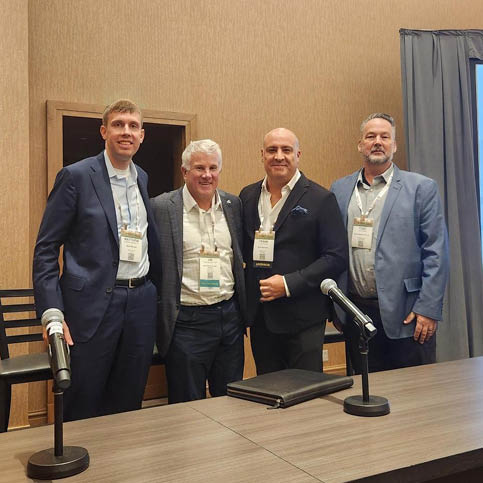

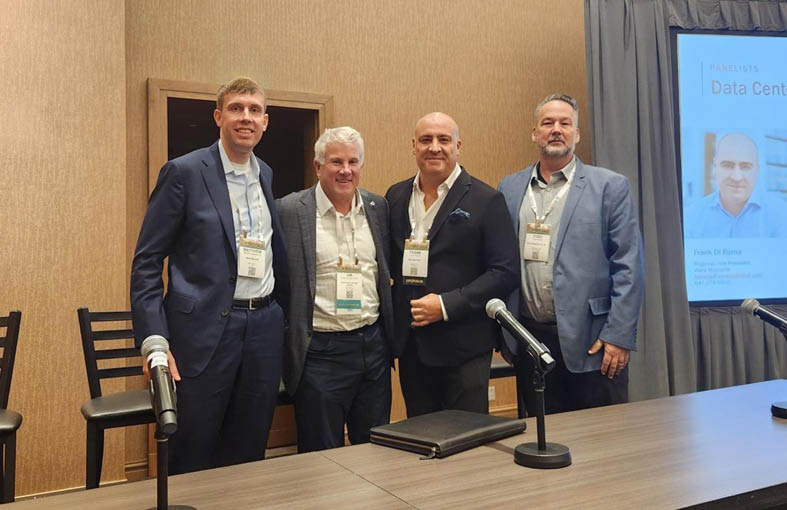
As demand for data centers accelerates, fueled by AI, hyperscale computing and cloud infrastructure, the challenges of site selection, utility access and community engagement are front and center. At a recent SIOR Fall conference panel, we had the opportunity to dive into these issues firsthand. We were joined by industry leaders Jim Kerrigan, Managing Principal at North American Data Centers, and Todd Johnson, Director of Development | Mission Critical at Ryan Companies to share insights on what it takes to deliver successful data center projects in today’s climate.
Power Availability: The Ultimate Gatekeeper
Power is the lifeblood of any data center and securing it has become one of the most significant hurdles in development. The availability of electrical power is the primary limiting factor for any new data center development. Without an effective “power story”, developments are not likely to find tenants, financing, or partners. Utilities are struggling to keep pace with demand, especially since the AI boom began. Todd noted, “utilities have spent the last three years trying to figure out how to manage ultra-inflated numbers of applications for very large amounts of power.”
To accelerate timelines, developers are turning to creative solutions to accelerate the time to market. These solutions include bridging power, on-site generation, or a combination of both. On-site, after-the-meter gas turbines are a popular solution. However, this equipment is now experiencing equipment lead times that rival new utility energizations. The bottom line: without a clear power strategy, projects can stall before they start.

The Labor Shortage Challenge
Labor availability emerged as a dominant theme during the conversation. Todd noted that “the labor issue is not going to go away,” emphasizing that early collaboration and trust-based commitments are critical to securing skilled trades. According to a recent article by CNBC, the Associated Builders and Contractors (ABC) mentioned that the U.S. construction industry will need nearly 500,000 additional workers in 2025 to keep pace with demand. For data centers specifically, Staffing @ KT mentioned that global forecasts predict a shortage of over 300,000 skilled construction workers by year-end. With unemployment in construction hovering around 3.2%, the tight labor market is pushing wages higher and creating fierce competition for electricians, HVAC technicians, and site supervisors.
Why does this matter? Delays in securing labor can derail timelines and inflate costs. Developers are under pressure to deliver projects quickly, especially as AI workloads demand rapid deployment. Without a reliable workforce, quality and safety can suffer, and reputational risk grows. The challenges with labor shortages highlight the power of strong relationships with trade contractors and other organizations which can support workforce development and mobilizations of required personnel to a fast moving project.
Community Engagement
Communities are increasingly vocal about their concerns about data center development. Data centers, particularly those supporting GPU-intensive workloads, can generate continuous noise pollution from mechanical cooling equipment operating 24/7. This persistent sound can feel intrusive, sparking opposition on social media, and at zoning hearings. In some regions, this resistance has escalated to moratoriums on new data center developments, as seen in parts of Illinois and Georgia. Placing a data center in a rural cornfield in Nebraska is vastly different from building in a suburban neighborhood in New Jersey. Dense areas offer advantages like existing power infrastructure and low-latency connectivity to metro customers, but they also heighten the risk of community concerns.
Despite the concerns, data centers bring tangible benefits to local economies. Todd emphasized that “if you want to maintain your rural community lifestyle and not have a lot of trucks, or a lot of excessive employees, a data center is an excellent occupant for your community because there is no infrastructure add, there is no traffic added.” These facilities provide high-paying technical jobs without overwhelming local infrastructure. Jim added another perspective: “within a community, there are certain municipalities that will charge a tax that may be higher if you’re a data center. Those revenues go to the bottom line of the residents in that village or municipality.” This means data centers can directly contribute to local budgets, funding schools, roads, and public services.
Site Selection: Incentives Over Geography
Choosing the right site for a data center is far more complex than finding an empty plot of land. It’s a strategic decision that balances power availability, connectivity, scalability, and community impact. As Todd explained, “the focus is really on the user, those end users have very specific requirements for what works for them in a site, as well as the utility and the city.” These requirements often dictate whether a location is viable.
Every panelist agreed that power is the single most critical element in site selection. The biggest factor is always going to be availability of utilities, specifically power. A greenfield site that has availability of power in the near term is always going to be preferred. Without sufficient power, even the most attractive site cannot support hyperscale or AI-driven workloads.
Developers often weigh the pros and cons of converting existing facilities versus starting from scratch. While repurposing a manufacturing building may seem cost-effective, Jim noted that “we don’t see it as often these days, they would prefer to start from scratch and build exactly the spec they’re looking for.” Existing structures must meet strict form factor requirements to accommodate power and cooling systems, making purpose-built facilities the norm.
The data center boom is reshaping real estate, energy, and technology landscapes. But success in this sector requires more than capital, it demands foresight, collaboration, and community engagement. Whether you’re a developer, broker, or municipality, understanding the evolving dynamics of power, labor, and legislation is key to unlocking the potential of data center infrastructure. Ware Malcomb has specialized experience in designing highly technical and complex data center buildings and sites. We understand the unique nuances related to power, water, and complex mechanical ventilation requirements specific to data centers. The firm collaborates with developers, end users, and local utility providers to design data center sites of all sizes and requirements. Our design professionals combine this expertise with the latest technological developments to create buildings and sites that are functional, efficient and secure.
Read more about Data Center Best Practices in the NAIOP E-Book
Learn more about our MEP Engineering, Architecture and Interiors services