
For anyone who has already considered modular construction delivery in multifamily, you understand its promised efficiencies. For those following its coverage, you know that real-world applications have often fallen short of expectations. My goal is to outline a few core principles to help your team embark on a successful volumetric modular journey.
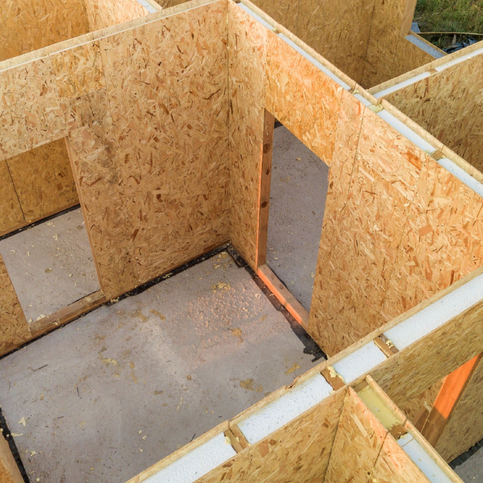
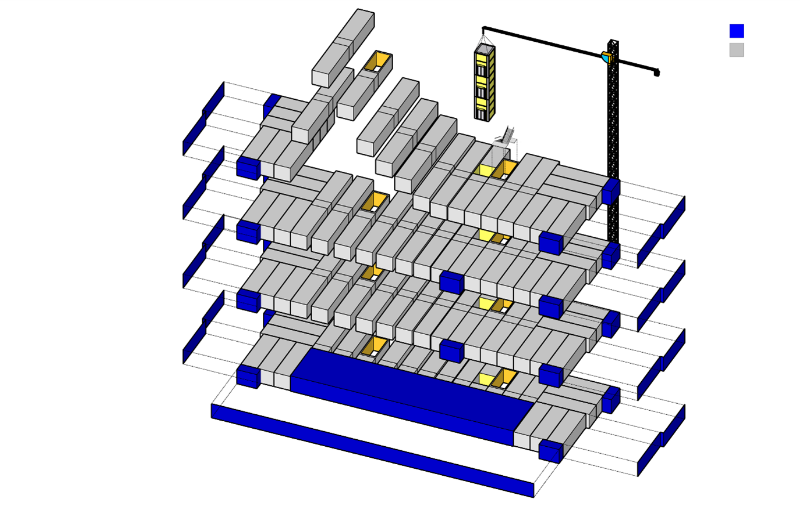
There are many types of off-site construction, ranging from partial solutions (such as panels and pods) to the “almost all in” approach, which is what I will address. The industry buzzword for this is volumetric modular, which refers to a collection of boxes delivered to a construction site, with the finished and fitted-out interiors. They are then stacked and aligned into a building at a breathtaking pace. The pieces are then zipped up inside to cover all the seams and gaps as the exterior finishes are applied.

Know the Right Projects
Modular construction, by its very nature, is standardized and repetitive, and therefore yields the best results when rolled out, unchanged in its basic components, over and over again. That’s where the maximum value is derived. To translate, if you have a flagship building or refined unit design you plan to replicate across multiple communities quickly, modular construction could be a profitable option—if you play by the rules.
Know the Rules
Note that the following are my rules, but they contain enough generic wisdom to have a broad, sound appeal. They may feel rigid, but that’s the very intention; if you are inclined to go rogue or freestyle in the design and construction process, this is not the delivery system for you. Contrary to prevailing design wisdom, the key to efficient and effective volumetric modular design and execution is to think inside the box.
At minimum, the following premises form a solid matrix for decision-making that will help steer your project in the right direction.
Design the Minimum Number of Maximum-Sized Boxes
Every time a uniquely sized box enters the assembly line, the jigs need to be reset and recalibrated, creating turbulence and inefficiency. Therefore, it is always best to design for the fewest possible number of unique box sizes to save production dollars. I’m referring here to the box’s overall dimensions rather than the guts, which can vary within reason.
In almost every case, volumetric modules are not fabricated in the exact location where they are to be stacked. In fact, modules often need to be transported hundreds of miles, or even across oceans. Shipping is expensive; therefore, it is beneficial to design boxes that maximize the value of the shipping method. Generally, this means they are sized to fill the flatbed, train car, or transport ship on which they will travel, leaving no leftover space. An ideal wood box is approximately twelve feet wide and seventy feet long. This first rule covers most of the creative design process, and while it sounds simple, it can be profoundly challenging because of the numerous details designers must consider to abide by it.
Design a Building That is Straight, Flat, and Rational
As I often mention in our design studio, the most efficient modular building should be a cereal box—a simple vertically extruded shell that eschews gratuitous offsets to produce a smooth exterior surface that can then be decorated. The simplest of designs, especially those with the bare minimum of unit and box dimension variations, are most likely to adhere to this rule. In other cases, there are necessary unit differences that will produce larger boxes and, hence, façade offsets. While that can be accommodated, it’s a little less efficient, and therefore more expensive.
You may react that this recipe seems destined to produce an austere, boring building certain to be the bane of whatever jurisdiction may be considering it, which is a distinct possibility if not treated with a deft hand. A straightforward way to add some variation, contrasting materials, and a play of shade and shadows is to tack on select exterior elements —such as eyebrows, canopies, and prefabricated balconies with decorative railings —to the otherwise flat surface of the building. Also, since most wood-framed volumetric modular buildings are skinned on site, there are opportunities to strategically use furring or over-framing to accent select segments of the façade and perhaps incorporate material changes. This should all be done within reason, of course. Gratuitous exterior corners are expensive.
Rational is another way to express the desirable, platonic form of the building; modular, by contrast, cannot accommodate curves, angles, or other heroic building articulation strategies. Ecstatic designs are best reserved for stick-framed projects.
Assemble the Most Disciplined Team on Earth
Every member of the overall design team, including architects, engineers, and perhaps most significantly, the client’s development personnel, needs to be “all in” to properly support the overall value premise of a foray into volumetric modular construction. Everybody needs to “color inside the lines.” This is not an onerous restriction; rather, it can be a satisfying and enriching design discipline. Think of it as akin to building a ship in a bottle. There’s a rigid exterior container, and all our elements of discovery and delight have to snuggle soundly within it, assembled with surgical precision. Decisions need to be made very early in the design process, and barring any catastrophic new information, they need to be adhered to —perhaps especially by the client’s development team, from top to bottom — to prevent backtracking and wasted time.
Know the Fabricator and its Process
There is not an endless supply of fabricators for wood modules, at least not domestically. There are a couple of large companies that account for significant swaths of what’s being produced overall, but smaller regional facilities are also popping up as the delivery method gains traction. Of course, it makes sense for the team to select the company that best meets their product needs. However, there are times when a factory closer to the intended construction site may be a more prudent choice to save on shipping costs.
At any rate, whoever is selected to assemble the boxes must know the design team’s rules and processes. While the generic guidelines I’ve laid out here apply fairly universally throughout the world of modular, each producer brings subtle nuances to the process that can demand unique, if barely noticeable, trademark details that the design team needs to learn and incorporate.
It is further necessary to understand who will do what in producing the documents from which the overall structure will ultimately be built. While the local architect/engineer team initiates the design and drawings, at some point, the architect surrenders his layouts to the fabricator for the production of shop drawings from which the individual boxes are built. It is necessary to work out the details of this handoff early in the process to avoid gaps or overlaps in the documentation and unnecessary delays.
Choose Sites That Fit Your Prototypical Buildings
One development process that might be considered reversed in volumetric modular construction is site selection. With bespoke projects, the land is generally sourced first, and then an appropriate building(s) is/are designed for it. As you may have gleaned from the preceding discussion, this is not the case with modular “roll-outs.” In the latter case, your team has already gone through the highly disciplined process of developing a prototypical building that aligns with your company’s values and is exquisitely crafted to satisfy your target demographic. In the spirit of mass production, it is therefore necessary to find appropriately shaped parcels of land that allow the prototypes to be placed as efficiently as possible without altering them. This means no curves, angles, or eccentric geometric shapes in the underlying parcel. As with the façade discussion above, modular flourishes on rational/platonically shaped sites, such as pristine rectangles or squares. Flatness is also a desirable feature.
You may be thinking that this limitation makes it more challenging to find appropriate modular sites, and you would be precisely correct. Please remember that this is a general principle; inevitably, situations will arise in which it will be necessary to transgress your own rules slightly, and they should be thoughtfully considered on a case-by-case basis.
Conclusion
This paper has only scratched the surface of the many layers that must be considered and understood to embark on a volumetric modular journey of discovery successfully. Note that the cost savings you pursue by embracing off-site modular construction may not be fully realized on the first foray; more likely, the project will break even or go a little into the red. That’s because the construction project will function like a giant laboratory where your assumptions and convictions are tested repeatedly, and that’s a good thing. The process requires significant learning and refinement. As noted above, modular is not a good fit for a one-off project; once this educational curve has been endured, subsequent project performance inevitably improves. As I like to say, “you’ll probably lose money on the first outing, maybe break even on the second, and be killing it by the third.” This is why it is necessary to anticipate a series of project roll-outs using the same ingredients if you are seriously intending to embrace off-site construction as part of your delivery system. When this ideal rhythm is established, you will realize the cost and time-saving advantages of volumetric modular construction—hopefully over and over again.