Los Angeles is famous for many things: sunshine, sprawl, creativity—and traffic. For generations, the city has been defined by the automobile, its freeways both a symbol of freedom and a daily source of frustration. To live in Los Angeles, the conventional wisdom goes, is to accept driving as a fact of life. Yet despite this deeply ingrained car culture, I choose to ride public transit. I do so not out of ideology alone, but because, on balance, transit in Los Angeles offers me convenience, predictability, productivity, and sustainability that driving rarely matches. While it comes with real drawbacks—delays, occasional discomfort, and limited flexibility—the benefits of riding transit far outweigh the costs. For me, riding transit is not a sacrifice; it is a rational, and often enjoyable, choice.
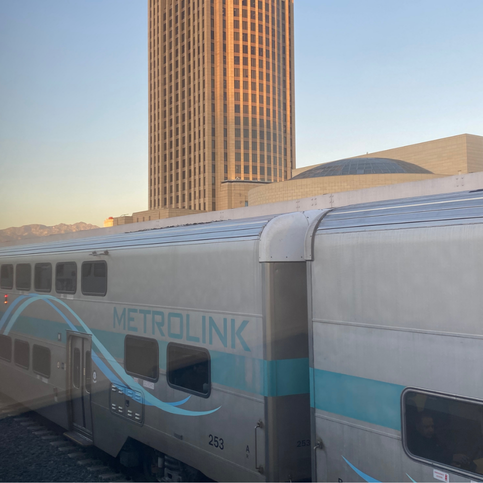
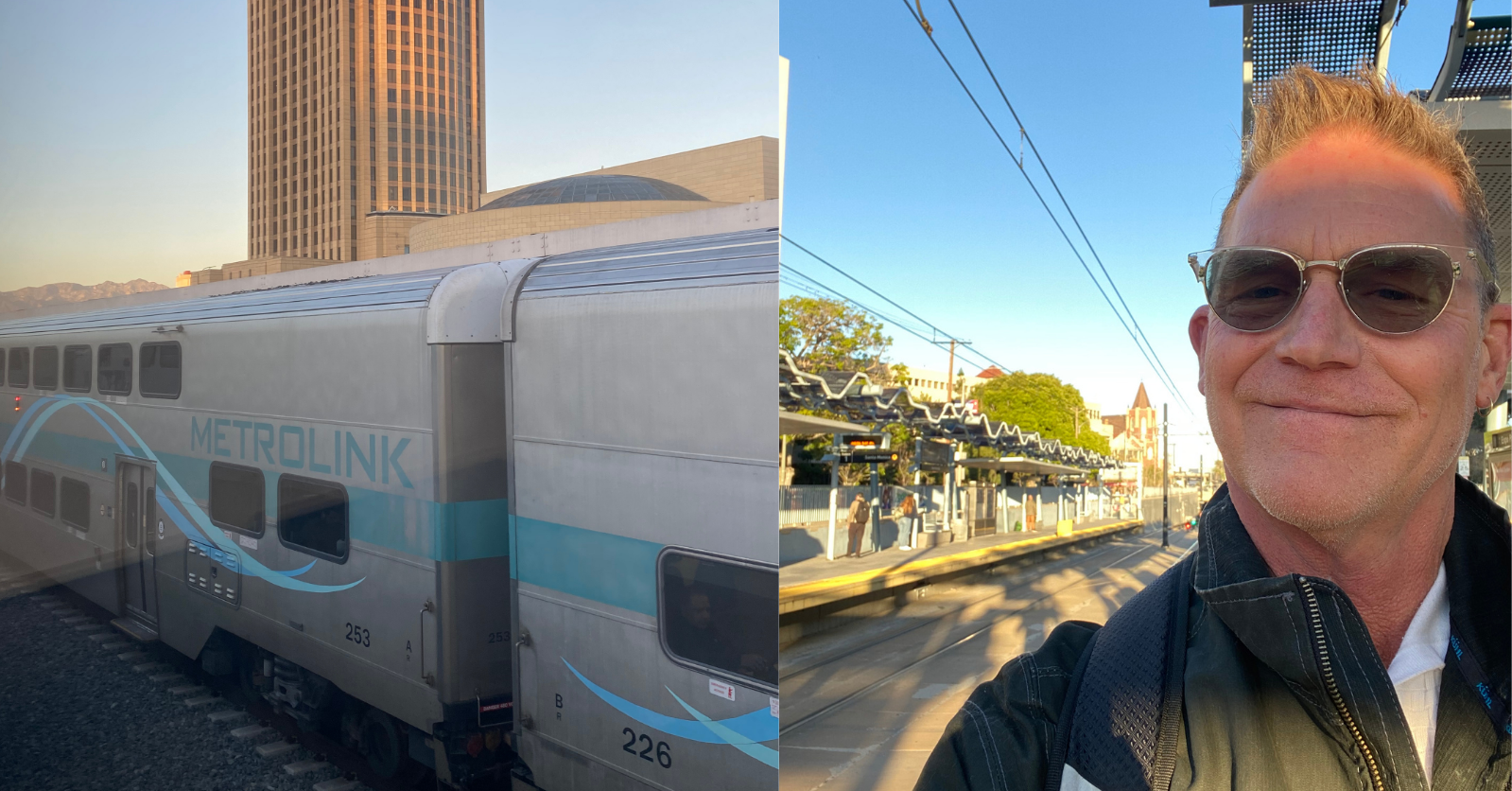
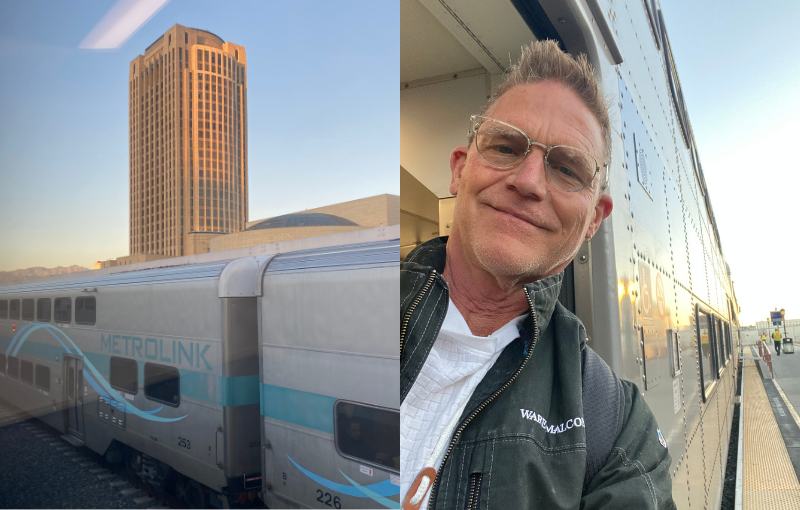
My daily and weekly travel relies on a combination of Metrolink, Amtrak, and LA Metro—particularly the Expo Line and the Red Line. Used jointly, these services knit together a region that is otherwise fragmented by freeways and congestion. Metrolink and Amtrak handle the longer regional jumps with a steadiness that highways rarely deliver, and Metro fills in the fine-grain connections once I’m in the city. In a place that people often describe as “too big for transit,” this mix proves the opposite: that transit becomes most powerful when it works as a network.
At first glance, driving seems synonymous with convenience. A car promises door-to-door service, control over departure times, and privacy. In practice, however, driving in Los Angeles often delivers the opposite. Traffic congestion is constant, parking is scarce and expensive, and even short trips can become unexpectedly stressful. Transit, by contrast, simplifies many of these daily frictions.
When I ride transit, whether it is Metrolink in the morning or the Expo Line later in the day, I do not have to think about where to park, how much it will cost, or whether I’ll need to circle the block for twenty minutes before finding a legal space. I do not have to budget extra time for accidents or construction bottlenecks that turn a routine drive into an ordeal. Instead, I walk to a platform, board, and let someone else handle the logistics. That shift—from active management to passive movement—is a powerful form of convenience that drivers often underestimate.
One of the strongest arguments for transit in Los Angeles is predictability. Trains operate on published schedules and defined rights-of-way. While systems can and do experience delays, those delays are often easier to plan around than freeway traffic, which can collapse with no warning. Anyone who has watched a navigation app suddenly revise an arrival time knows how quickly driving predictability can evaporate.
Knowing that a commute will take approximately the same amount of time each day has real value. Metrolink and Amtrak, in particular, offer a reassuring consistency for regional travel, while the Red Line provides a reliable spine through the urban core. Even if a trip is not the shortest possible on paper, the confidence of knowing when I will arrive reduces stress and allows better planning. Predictability, more than raw speed, is what makes a commute feel manageable.
Perhaps the most transformative benefit of riding transit is the opportunity to work in relative peace. With a hotspot, onboard Wi‑Fi, and a seat at a table—especially on Amtrak or Metrolink—transit becomes a moving office. Emails get answered, documents reviewed, and ideas outlined. Time that would otherwise be lost to staring at brake lights becomes productive—or, just as importantly, restorative.
Driving demands constant vigilance. Even in heavy traffic, a driver must remain alert, hands on the wheel, eyes forward. Transit frees that mental bandwidth. On the Expo Line or Red Line, I can read, write, or simply think. That ability to reclaim time fundamentally changes how longer trips feel. A forty-minute ride spent working or reading does not carry the same psychological cost as a forty-minute drive.
Riding transit also allows me to opt out of the emotional burden of driving in Los Angeles. Aggressive traffic, sudden braking, and the ever-present hunt for parking all take a toll. I do not worry about my car being damaged or ticketed, or about garage fees quietly accumulating while a meeting runs long. Those stresses disappear the moment I step onto a train. In a city where the car can feel like a second job—fueling it, maintaining it, protecting it, storing it—transit offers something close to relief.
Union Station deserves special mention. More than a transfer point, it is the symbolic heart of Southern California rail. Passing through Union Station—moving between Metrolink, Amtrak, and the Metro Red Line—feels like participating in a longer civic story, one that predates the freeway era and points toward a more connected future. Its architecture carries a particular calm: a generous hall, a dignified sequence of spaces, the sense that movement can be graceful rather than frantic. Even on busy days, Union Station reminds me that infrastructure can have character, and that public places can still feel like a shared living room for the city.
Beyond personal convenience, riding transit aligns with broader environmental and social goals. Transportation is a major source of emissions, and private automobiles contribute significantly to congestion and pollution. By choosing transit, I reduce my personal carbon footprint and help support a system that moves more people using fewer resources. It is a small action, but one that feels meaningful.
Transit also exposes me to the human side of the city. The Red Line and Expo Line in particular are places where students, workers, artists, tourists, and neighbors briefly share space. The experience is often colorful and occasionally challenging, but it is rarely dull. These moments of shared movement create a sense of connection that driving simply does not.
This is not to ignore the drawbacks. Trains are sometimes late. Service disruptions happen. There are moments when co-riders are unpredictable or uncomfortable, and schedules can limit flexibility, especially late at night. And unlike driving, transit does not always reward spontaneity—you can’t simply decide, at any hour, to change your route without checking a timetable. Riding well often means planning well.
Still, when weighed against the daily frustrations of driving—the stress, the cost, the isolation—those drawbacks feel manageable. Transit’s imperfections are visible, but so are its benefits. Each ride reinforces my belief that convenience is not just about speed, and freedom is not just about control.
As an architect, I also ride transit with a different kind of attention: I can’t help but see how the future of transit in Los Angeles is tied directly to development. Transit is not only a way to move people; it is a framework for shaping the city. When housing, jobs, schools, and everyday services cluster around reliable stations, the city becomes easier to live in—less dependent on parking lots and widening roads, more focused on streets and public spaces that invite people to stay. In that sense, every new building near a station is also a transportation project, and every station-area plan is also an urban design opportunity.
That future depends on choices that designers and developers can influence. A station surrounded by blank walls, empty parcels, and hostile sidewalks will always feel like an afterthought. But a station embraced by mixed-use buildings, active ground floors, clear wayfinding, shade, lighting, and safe crossings can become a true neighborhood center. The “last mile” isn’t a technical footnote; it is the lived experience of transit. Good architecture can make the walk to the platform feel dignified and intuitive, not exposed or uncertain. It can stitch together street grids, create welcoming edges, and replace seas of parking with places that generate life.
I think about this every time I transfer: the difference between merely arriving at a station and arriving somewhere. Union Station succeeds because it treats movement as civic life. That idea can scale outward—into station plazas, adaptive reuse, housing above retail, and new public rooms that make transit feel normal, not exceptional. If Los Angeles wants a transit future, it will not be achieved by tracks and schedules alone. It will be achieved by building the kind of city that makes riding the most convenient option.
Riding transit in Los Angeles is, ultimately, a deliberate choice. It is an acceptance of shared space in exchange for predictability, productivity, and calm. Using Metrolink, Amtrak, the Expo Line, and the Red Line together allows me to move through the region efficiently and thoughtfully. And because I design buildings for a living, each trip also feels like a glimpse of what Los Angeles can become: a place where mobility and development reinforce each other, and where the city’s best public spaces are the ones that help people move—and meet—well.