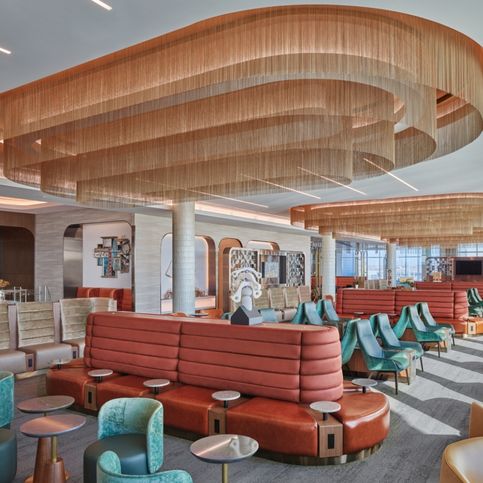
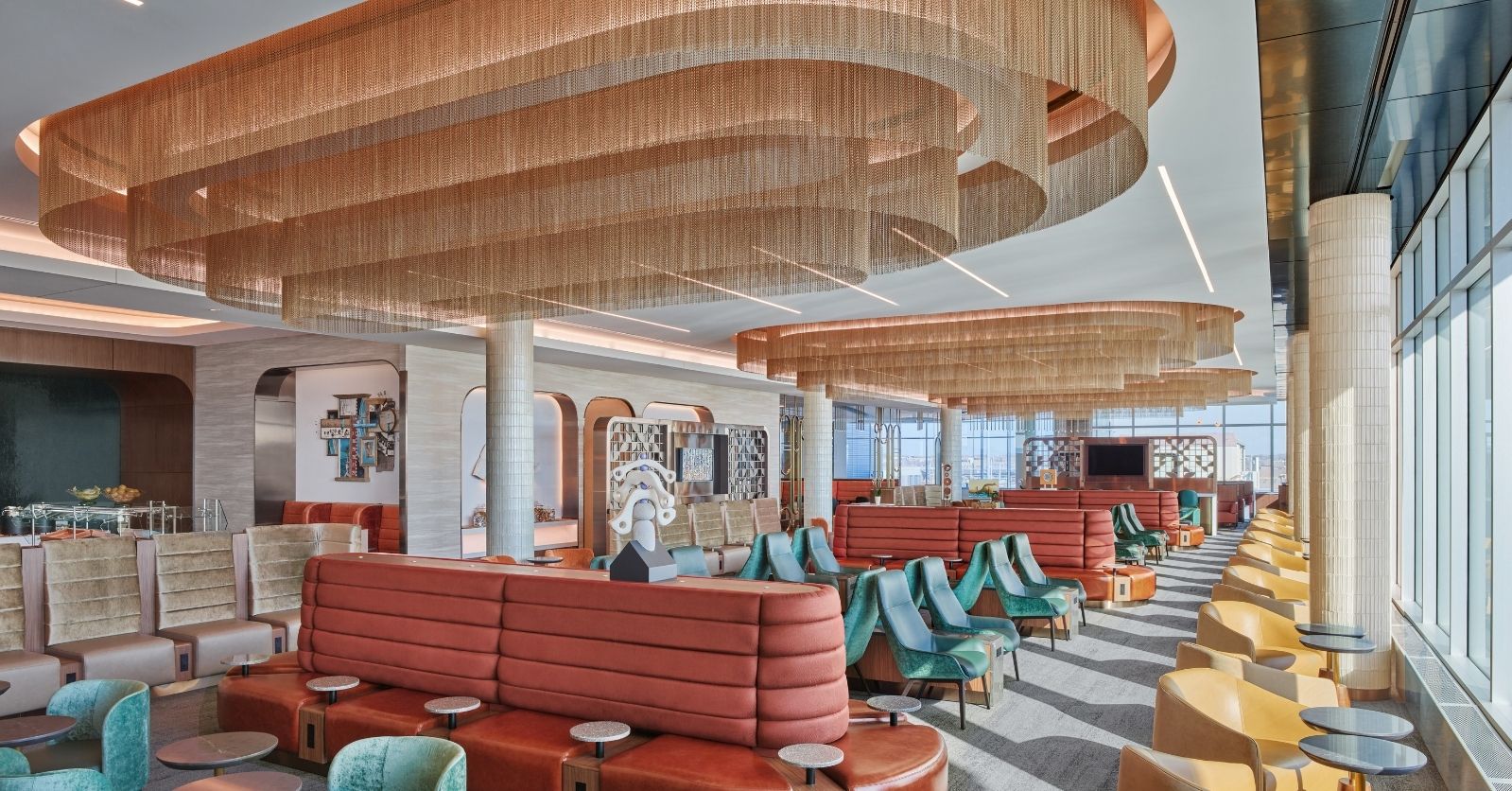
The most memorable hospitality spaces don’t just serve guests but rather create a sense of connection and place. In today’s hospitality landscape, travelers crave more than comfort. They want experience. Whether beginning a journey or returning home, travelers find a moment of respite in the airport lounge, seeking experiences that authentically reflect the character of the city around them. Delta Sky Club lounges have embraced this philosophy, creating environments that go beyond premium amenities to celebrate the culture, history and spirit of local communities.
From a lounge in Detroit that pays tribute to the city’s automotive heritage, an Austin Sky Club infused with country charm and a Jacksonville lounge that captures the unique aesthetics of the coastline, the city serves as the inspiration for the lounge design. For designers, these lounges offer a compelling case study on how to authentically incorporate regional identity into hospitality environments and create a human experience that goes beyond the brand. While a global brand provides consistency and familiarity, the most compelling hospitality experiences are rooted in local identity. Striking that balance has become a defining principle of Delta Sky Club design.
Beyond the Brand Standard
One of the biggest challenges in hospitality design is balancing brand consistency with local authenticity. Guests should recognize the familiar qualities of a brand while discovering elements unique to each destination. Rather than relying on logos or brand colors alone, Delta’s identity is conveyed through a thoughtfully curated travel experience.
“The local tie is really important because it’s key to the experience that they’re creating for their customers beyond just the Delta brand,” says Karen McCallum, Principal, Interior Architecture & Design at Ware Malcomb. “As it has evolved, the standards have become looser. And the focus has moved away from the brand color story and has become more focused on representing the local experience through finishes and colors.”
This emphasis on local storytelling reflects a broader shift in hospitality design. For some travelers, a layover may be their only interaction with a destination, creating an opportunity for the lounge to serve as an introduction to a city’s culture and character. Defining what feels genuinely local therefore becomes a critical part of the design process. Whether inspired by cultural traditions, architecture, or the surrounding landscape, a city’s history provides the foundation for translating its story into the built environment.
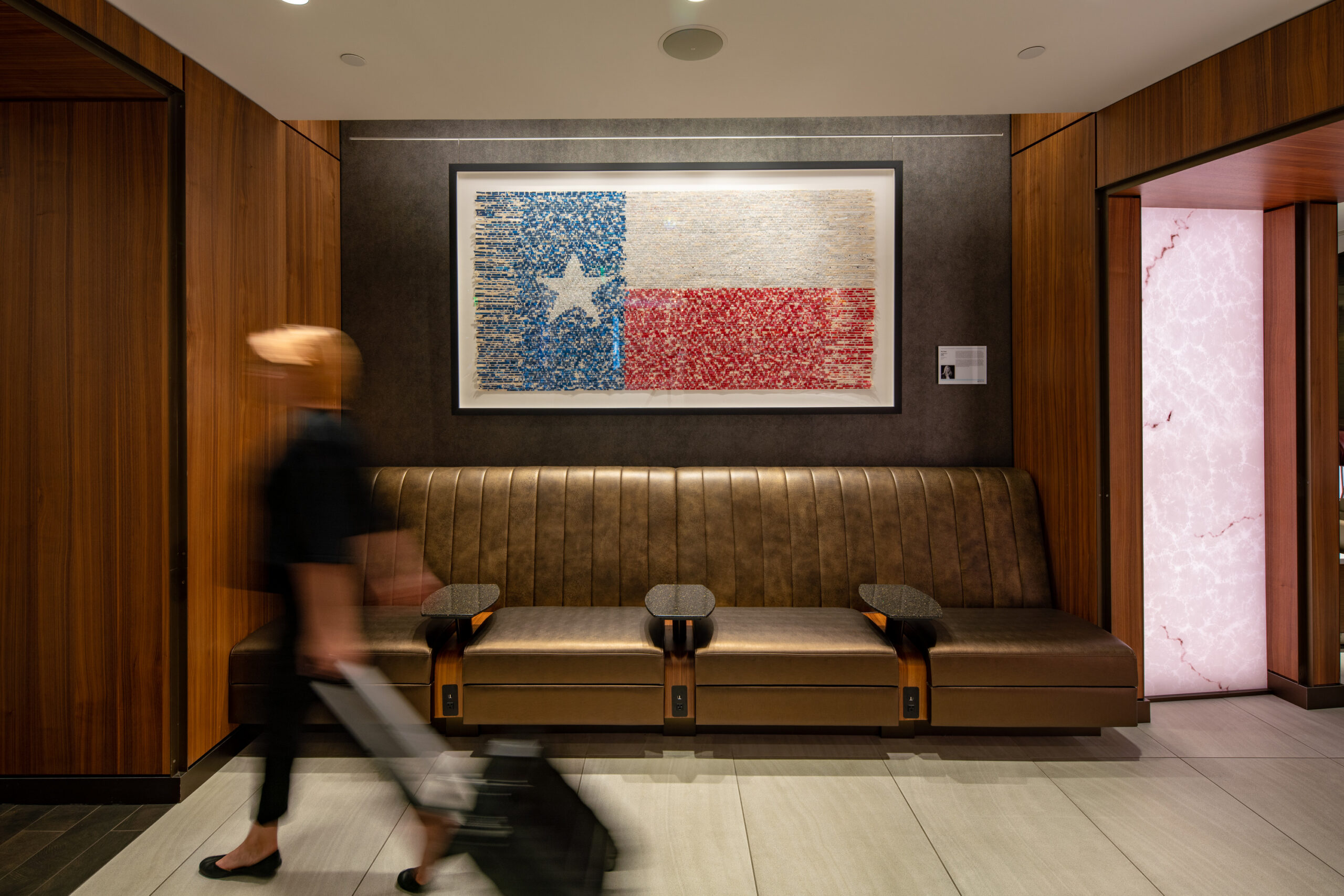
For the Atlanta Terminal D lounge, the main driving elements of their story is a Southern front porch with plantation shutters and how that is the first place that you welcome guests in. It’s where you can sit down for afternoon tea or visit with your guest after you eat.
“The concept of home is this silent design lead,” says Caroline Riley, Senior Interior Designer at Ware Malcomb. “Atlanta is Delta’s home, so the connotation that you’re walking into someone’s home through the front porch is more of a higher-level design element that is unique to that destination.”
Once that story is established, the challenge becomes translating it into a tangible guest experience. Every material, finish, partnership, and planning decision must reinforce the narrative while supporting the way travelers use the space.
Bringing Regional Influence to Life
Bringing a sense of place to life begins long before materials are selected or layouts are developed. Research into a city’s history, landmarks, architecture, and culture helps establish the north star that guides the project narrative.
However, the most meaningful insights often come from beyond online research. Engaging local clients and stakeholders who offer firsthand knowledge of the region offers a deeper understanding of its culture, community and identity. These conversations reveal perspectives that resonate authentically with guests and bring greater richness to the design. Together, this discovery process becomes the project’s guiding compass, establishing the framework for the story the space will ultimately tell.
Delta lounges should feel distinctly tied to place through thoughtful selections in color, materials, art, food and partnerships. A true sense of place goes beyond what guests immediately see. Engaging local makers, craftspeople and community partners not only supports the local economy but also reinforces a commitment to meaningful social impact. Authentic local design requires uncovering the cultural nuances, stories, and experiences that truly define a place.
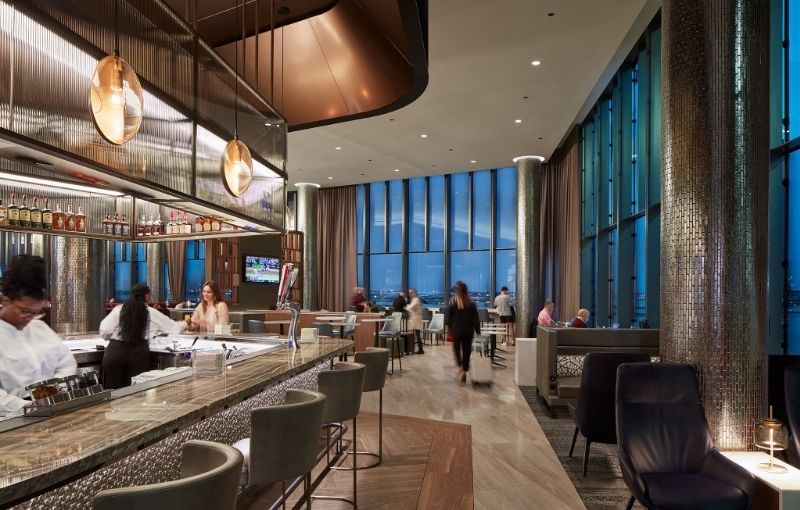
“A growing trend in hospitality design is placing greater value on the intangible,” says Riley. “Beyond the guest experience, designers are considering how projects can support local economies through regional partners, craftspeople, and resources. These efforts may not be visible in the finished space, but they reflect a deeper commitment to social responsibility. As architects, we have a unique opportunity to influence those decisions and create a positive impact that extends beyond the built environment.”
That philosophy extends beyond aesthetics and can directly influence operational and planning decisions. The Jacksonville Sky Club demonstrates how understanding a destination’s culture and demographics can shape the guest experience in meaningful ways.
The Jacksonville Sky Club illustrates the importance of understanding a destination before designing for it. As both a business hub and a beach community, Jacksonville attracts a diverse mix of travelers, requiring a lounge experience that supports both productivity and relaxation. Rather than relying on obvious coastal themes, the design balances these identities in a way that feels authentic and refined.
Local demographics also influenced key planning decisions. With a significant senior population among its travelers, the lounge incorporates greater wheelchair accessibility than Delta’s typical standard. Equally important was creating an intuitive flow, allowing staff to operate efficiently behind the scenes while minimizing disruptions to guests. By seamlessly integrating service functions into the design, the lounge delivers a more comfortable and elevated travel experience.
“I think within design right now, experience is what people are really focused on,” says McCallum. “It spans all types of design, not just hospitality. The experience should hit all of a guests senses and ultimately reflect the local DNA.”
Authenticity Through Experience
Understanding a place is only the first step. The true challenge is creating a space that authentic versus feels superficially themed. The most impactful spaces are shaped by intentional design decisions, allowing a sense of place to emerge organically. Materials, colors, and textures can reflect elements of the local landscape, architecture, or heritage. For example, the San Francisco Sky Club should extend beyond direct references to the Golden Gate Bridge. By exploring the bridge’s materials, distinctive color, craftsmanship and structural details, designers can translate its essence into the space in a more subtle and sophisticated way.
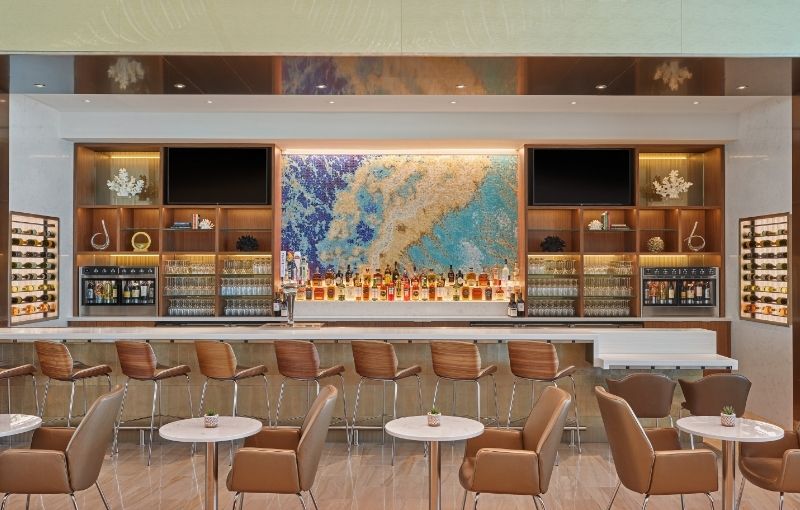
In Atlanta, using the Georgia peach as inspiration can easily become almost cliché if approached too literally. The goal is not to rely on obvious symbolism, but to capture the essence of the place through finishes, furnishings, materials and architectural details. References can be playful or unexpected, but successful design goes beyond direct imagery. When a concept is too overt, it risks feeling themed rather than authentic. Instead, thoughtful, layered interpretations create a richer connection to the city and its character. This layered approach allows guests to experience a destination in a more personal way, creating an emotional connection rather than a literal interpretation.
“For me, I prefer to be quiet and let the space whisper to you what the intent was,” says Riley. “It allows guests to create their own expression of the space, which allows them to see themselves in the space. Therefore, they see themselves within a brand because they aren’t being told this is what the space is. And I think that that allows a lot of room for inclusivity.”
The Evolution Ahead
As guest expectations continue to evolve, the definition of hospitality is expanding as well. Beyond creating a sense of place, designers are increasingly focused on how spaces support different modes of travel, work and well-being.
The future of hospitality design is being shaped by a greater emphasis on zoning and choice. Guests increasingly seek spaces that feel removed from the energy and congestion of the terminal, offering a sense of retreat and separation. In the past, guests gravitated toward the bar or a limited number of work-friendly areas. Today, expectations have shifted. Every seating zone is expected to provide the comfort, connectivity and flexibility needed to support both focused work and personal downtime.
“Someone made a comment about laptop tables being so big but it’s not just a laptop table – your food and drink all must fit that one element,” says McCallum. “By providing all the elements they need, we help support this evolution of the overall experience.”
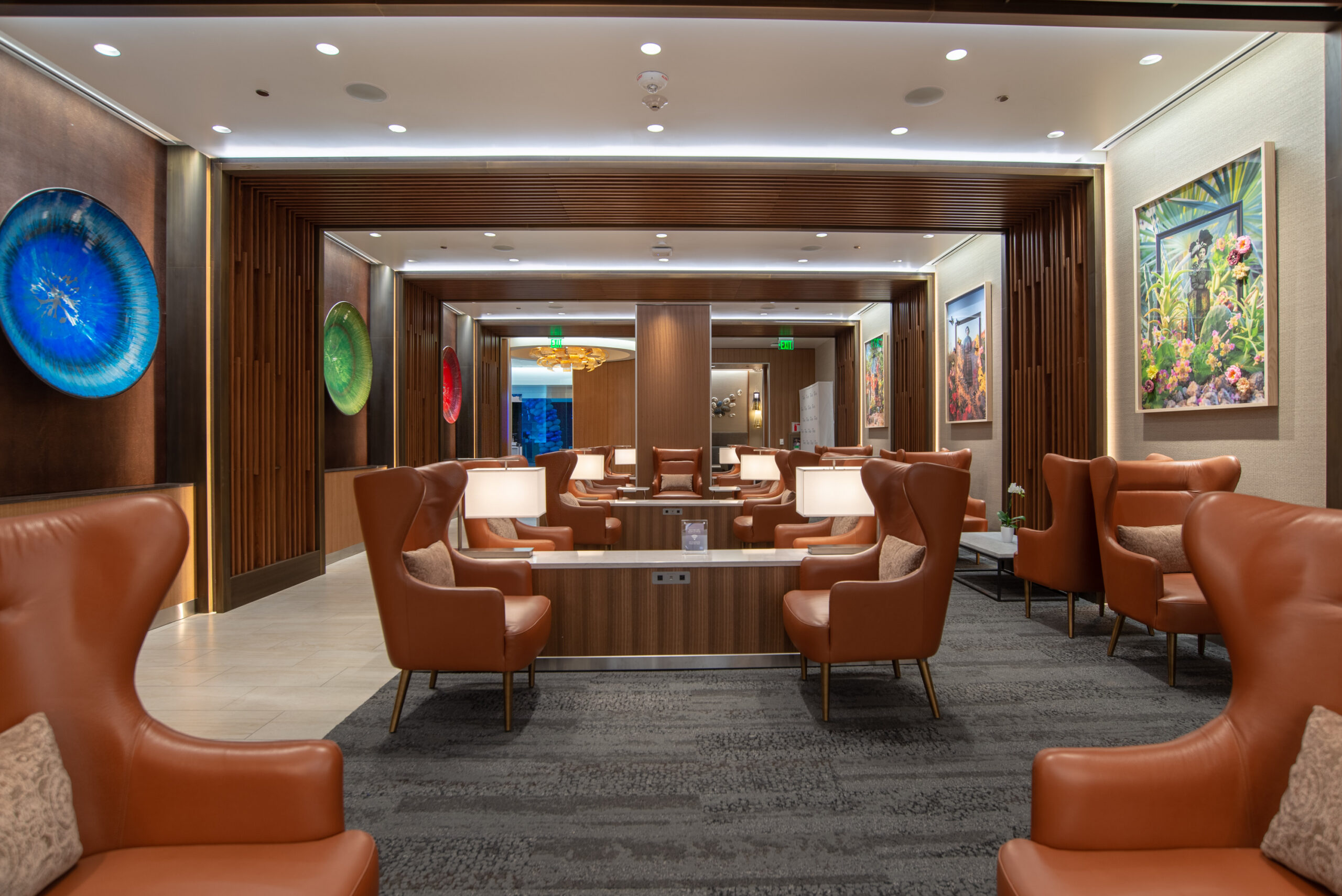
For a global hospitality brand, consistency and authenticity must coexist. Ware Malcomb’s approach balances familiar brand touchpoints with thoughtful expressions of local culture and community, ensuring each lounge feels both recognizable and uniquely connected to its destination.
“Hospitality is about being part of a community where everyone experiences the space differently,” says Anthony Simon, Practice Leader & Director, Retail. “It’s about feeling comfortable, feeling appreciated, feeling attended to. That is the thread that ties together the overall experience.”
Ultimately, hospitality design is not simply about creating beautiful spaces. It is about creating environments where people feel welcome, understood and connected. When every touchpoint is shaped with intention, the result is more than a lounge. It becomes a reflection of place, a reflection of the brand, and, most importantly, a reflection of the guest.
“Feeling cared for is a powerful design element,” says Riley. “Especially in a local airport or travel destination, there is something powerful about recognizing elements that feel authentic to where you are. What makes the Delta brand so successful is its ability to help customers see themselves reflected in the brand. It’s kind of a mic drop moment.”